
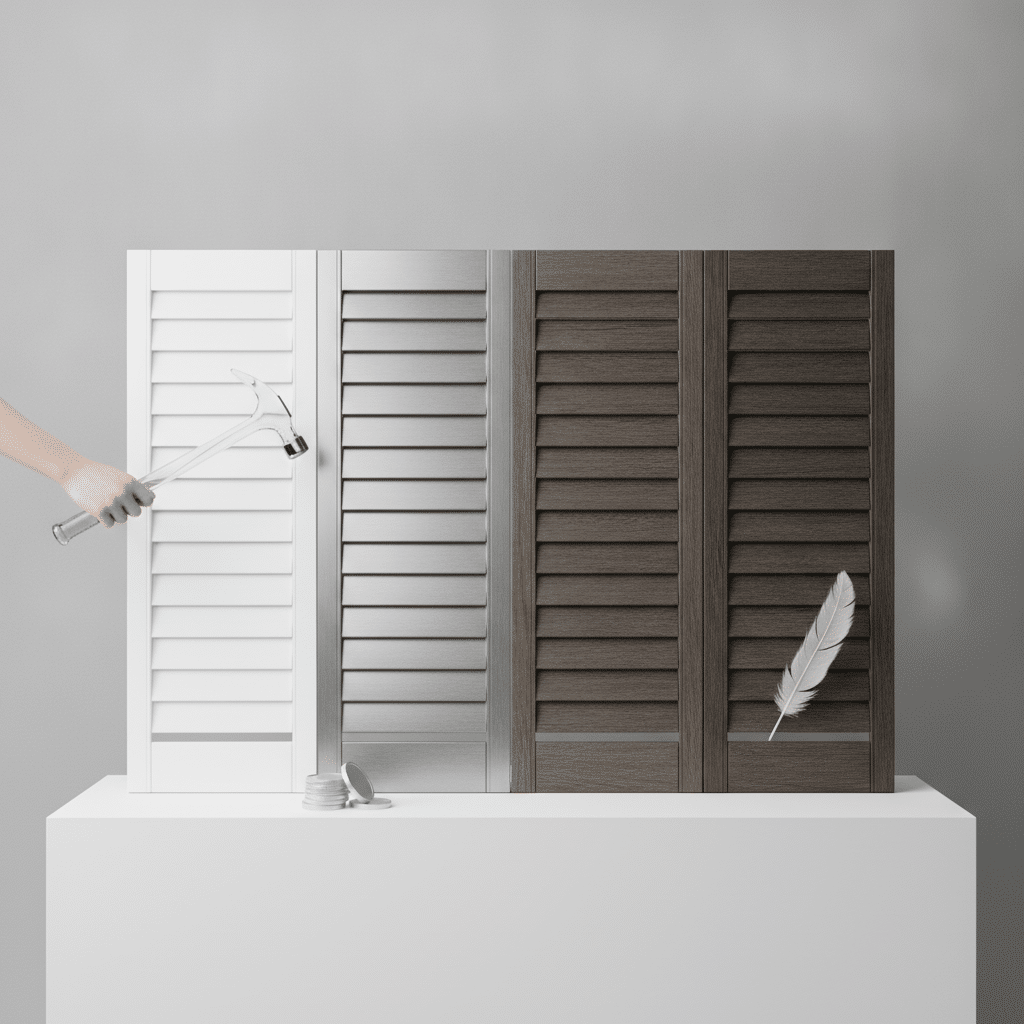
Aluminium vs PVC Shutters: Comparing Strength, Cost, and Aesthetics
Choosing the right shutters for your Sydney home involves balancing various factors, from durability and cost to the overall aesthetic you want to achieve. Among the most popular options, aluminium and PVC shutters stand out, each offering distinct advantages. This comprehensive guide is designed for Sydney homeowners looking for practical, budget-conscious insights to make an informed decision between these two robust material types. We’ll delve into their characteristics, ideal applications, and directly compare their performance across key metrics to help you select the perfect window furnishing solution.
Understanding Aluminium Shutters
Aluminium shutters are renowned for their strength, durability, and modern appeal. Often associated with outdoor applications, their robust nature makes them a versatile choice for various settings.
Key Characteristics and Benefits
Aluminium is a lightweight yet incredibly strong metal, making it an excellent material for shutters. When properly treated, typically with a powder-coated finish, it becomes highly resistant to corrosion, rust, and UV damage. This resilience means aluminium shutters can withstand the harsh Australian climate, including intense sun, strong winds, and heavy rain, without warping, cracking, or fading. They offer superior security due to their inherent rigidity and are virtually maintenance-free, requiring only occasional cleaning to keep them looking their best. The sleek, often minimalist design of aluminium shutters lends a contemporary edge to any property.
Ideal Applications
Given their exceptional durability and weather resistance, aluminium shutters are particularly well-suited for outdoor areas. Think balconies, patios, pergolas, and outdoor entertainment spaces where exposure to the elements is a constant. They are also an excellent choice for windows and doors that require enhanced security or for large openings where a sturdy, rigid solution is paramount. For Sydney homes, especially those in coastal areas, powder-coated aluminium shutters offer a fantastic solution against salt air corrosion, ensuring longevity and performance. They can also be used internally for a modern, industrial aesthetic or in high-traffic areas where robustness is a priority. To see examples of how these shutters can transform spaces, consider looking at our Our Work gallery.
Considerations for Aluminium
While highly advantageous, aluminium shutters do come with certain considerations. Their initial cost tends to be higher than PVC options, reflecting their superior strength and longevity in demanding environments. They can also be heavier, which might require more robust installation. Aesthetically, while sleek and modern, the metallic finish might not suit every interior design scheme, particularly those aiming for a softer, more traditional feel. The colour range, while extensive in powder-coat options, might not offer the same subtle variations or timber-look finishes available with other materials.
Understanding PVC Shutters
PVC (Polyvinyl Chloride) shutters, often referred to as ‘faux wood’ or ‘synthetic’ shutters, are a popular alternative, particularly for indoor applications. They offer a blend of practicality, affordability, and aesthetic versatility.
Key Characteristics and Benefits
PVC is a synthetic material known for being waterproof, lightweight, and incredibly easy to clean. These characteristics make PVC shutters an ideal choice for areas prone to moisture and humidity, such as bathrooms, laundries, and kitchens. Unlike timber, PVC will not warp, crack, or swell when exposed to water, making them a highly stable and long-lasting option for wet zones. Modern PVC shutters are engineered to be UV resistant, preventing discolouration or yellowing over time, a common concern with older PVC products. They also offer good insulation properties, helping to regulate indoor temperatures and potentially reduce energy costs. Furthermore, PVC can be manufactured to mimic the look and feel of natural timber, providing a classic aesthetic without the associated maintenance.
Ideal Applications
The waterproof nature of PVC shutters makes them mandatory for Sydney bathrooms and laundries, where moisture and steam are ever-present. They are also an excellent choice for kitchens, children’s bedrooms, and any indoor area where durability, ease of cleaning, and resistance to everyday wear and tear are important. Their insulating properties make them suitable for living rooms and bedrooms, contributing to a more comfortable indoor environment. While primarily an indoor product, some specialised outdoor PVC shutters are emerging, though they typically do not offer the same level of structural integrity or long-term outdoor resilience as dedicated aluminium options. For more information on waterproof options, you might find our guide on Why Waterproof PVC Shutters are Mandatory for Sydney Bathrooms helpful.
Considerations for PVC
Despite their many benefits, PVC shutters have limitations. They are not as structurally rigid or strong as aluminium shutters, making them less suitable for very large openings or areas requiring high security. While modern PVC is stable, extreme temperature fluctuations can still cause some expansion and contraction, which might affect the smooth operation of louvres over many years if not properly manufactured and installed. For full outdoor exposure, particularly in direct sunlight and harsh weather, PVC shutters generally won’t match the lifespan or performance of their aluminium counterparts.
Direct Comparison: Aluminium vs PVC
When weighing your options, a direct comparison across key performance indicators will help clarify which material best suits your specific needs.
Strength and Durability
**Aluminium:** Unmatched in strength and rigidity. Excellent for security, impact resistance, and maintaining structural integrity over large spans. Ideal for high-traffic areas and outdoor use where robustness is paramount.
**PVC:** Durable for indoor use, resistant to moisture, chipping, and fading. While strong for its weight, it doesn’t offer the same level of impact resistance or security as aluminium. Not designed for extreme structural loads.
Cost-Effectiveness
**Aluminium:** Generally has a higher upfront cost due to the material and manufacturing process. However, its exceptional lifespan and minimal maintenance can offer superior long-term value, especially in demanding outdoor or commercial settings.
**PVC:** Typically more budget-friendly for initial purchase and installation. Offers excellent value for money, particularly for indoor applications where its specific benefits (waterproof, easy clean) are highly valuable.
Aesthetic Appeal and Design Flexibility
**Aluminium:** Offers a sleek, modern, and often industrial aesthetic. Available in various powder-coated colours, providing a contemporary finish. Best suited for minimalist, modern, or architectural designs.
**PVC:** Highly versatile in appearance. Can be manufactured to closely mimic the look of natural timber, offering a classic or traditional aesthetic. Available in a wider range of colours and finishes, providing more flexibility to match diverse interior design schemes.
Maintenance Requirements
Both materials are celebrated for their low maintenance.
**Aluminium:** Requires only occasional wiping down with a damp cloth to remove dust and grime. Resistant to rust and corrosion (when powder-coated), making it incredibly easy to care for.
**PVC:** Extremely easy to clean. Its waterproof surface allows for simple wiping or even hosing down (for detached panels) without fear of damage. Resists mould and mildew in damp environments.
Weather Resistance and Insulation
**Aluminium:** Exceptional weather resistance for outdoor conditions. Withstands sun, rain, wind, and coastal salt spray. While not primarily an insulator, it can help block solar heat gain when closed, contributing to thermal regulation.
**PVC:** Outstanding for indoor humidity and moisture resistance. Excellent thermal insulator, helping to keep rooms cooler in summer and warmer in winter, which can contribute to energy efficiency for Sydney homes.
Light Control and Privacy
Both aluminium and PVC shutters excel at providing precise control over light and privacy through their adjustable louvres.
**Aluminium:** Often features larger louvres, ideal for maximising views when open and providing substantial light block-out and privacy when closed. Great for outdoor areas where managing sun glare is crucial.
**PVC:** Offers excellent light control and privacy for indoor spaces. The ability to tilt louvres allows for directing light and maintaining seclusion without completely blocking natural light.
Making the Right Choice for Your Sydney Home
The decision between aluminium and PVC shutters ultimately depends on your specific needs, the location of the shutters, and your budget.
Assessing Your Specific Needs
Consider where the shutters will be installed. Are they for an outdoor living area exposed to the elements, or an indoor bathroom with high humidity? Do you need enhanced security, or is the primary goal aesthetic appeal and light control? If you’re looking for solutions for your windows and doors, exploring the range of plantation shutters might be a good starting point. Understanding these core requirements will significantly narrow down your options.
Environmental Factors
Sydney’s climate plays a crucial role. For external applications, particularly in coastal areas, the superior weather resistance and corrosion protection of powder-coated aluminium are invaluable. For internal spaces that experience high humidity or potential water splashes, PVC’s waterproof properties make it the clear winner. Both materials are designed to withstand UV radiation, but aluminium generally offers more robust long-term performance in direct, intense outdoor sunlight.
Budgeting for Shutters
While PVC shutters typically offer a more budget-friendly initial investment, consider the long-term value. Aluminium shutters, despite a higher upfront cost, may outlast PVC in harsh outdoor conditions, potentially offering a better return on investment over many years. Factor in the expected lifespan, maintenance costs, and the specific benefits each material brings to your home when evaluating the overall cost-effectiveness.
Frequently Asked Questions
Are aluminium shutters suitable for coastal homes in Sydney?
Yes, absolutely. High-quality aluminium shutters, especially those with a durable powder-coated finish, are exceptionally well-suited for coastal environments in Sydney. The powder coating provides an excellent barrier against salt air corrosion, ensuring the shutters remain functional and aesthetically pleasing for many years, even with constant exposure to the sea breeze.
Can PVC shutters be used outdoors?
While some manufacturers offer specialised outdoor PVC products, traditional PVC shutters are primarily designed for indoor use. For full outdoor exposure, particularly to direct, intense sunlight and harsh weather conditions, aluminium shutters generally offer superior structural integrity, UV resistance, and overall longevity. Using standard indoor PVC shutters outdoors may lead to accelerated degradation, discolouration, or warping over time.
How do the warranties typically compare between aluminium and PVC shutters?
Warranty periods can vary significantly between manufacturers, but generally, aluminium shutters often come with longer warranties on structural integrity and finish, reflecting their robust nature and expected lifespan in demanding conditions. PVC shutters typically offer good warranties on material defects, resistance to yellowing, and general functionality for indoor use. Always check the specific warranty details provided by your chosen supplier.
Do PVC shutters yellow over time?
Modern, high-quality PVC shutters are manufactured with advanced UV inhibitors and formulations specifically designed to resist yellowing and discolouration. Older or lower-quality PVC products might have been susceptible to yellowing from prolonged UV exposure. When purchasing PVC shutters, ensure you choose a reputable supplier that guarantees UV stability to prevent this issue.