
Practical shutter options for busy Sydney homes
Composite Shutters
Composite shutters are a practical window covering option for Sydney homes where durability, value and everyday use matter. They offer the clean look of plantation shutters with materials designed to handle regular opening, closing, light control and privacy needs.
Get your shutter price View shutter types
Composite Shutters for Sydney Homes
Composite shutters are made from engineered materials rather than solid timber. They are designed to give a neat shutter look while offering a practical balance of durability, stability and value.
They can suit many rooms in Sydney homes, including bedrooms, living rooms, dining areas, home offices and selected kitchen or laundry areas, depending on the exact product and moisture exposure.
For homeowners comparing shutter materials, composite shutters can be a good middle-ground option when you want a clean plantation shutter style without choosing a full timber shutter.
Why Choose Composite Shutters?
Composite shutters are often chosen because they are practical, consistent-looking and suited to regular household use. They can provide the same everyday benefits people expect from shutters, including privacy, light control and a tidy custom-made appearance.
They are also popular where homeowners want a durable-looking finish that is easier to maintain than fabric window coverings. The louvres can be angled throughout the day to manage sunlight, street privacy and airflow.
For busy homes, rental properties, family spaces and rooms that need a straightforward shutter solution, composite shutters can be a sensible option to consider.
Best Rooms or Situations for Composite Shutters
Composite shutters can work across many areas of the home, provided the material, frame and panel layout are suitable for the room conditions.

Bedrooms
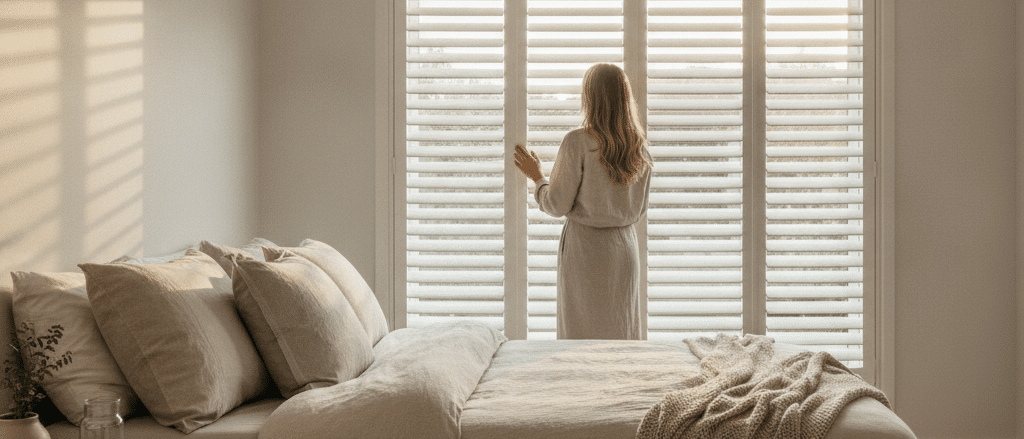
Composite shutters are a good option for bedrooms where privacy, neat styling and light control are important. They can help reduce glare and create a calmer room without the bulk of heavy curtains.
Living Rooms
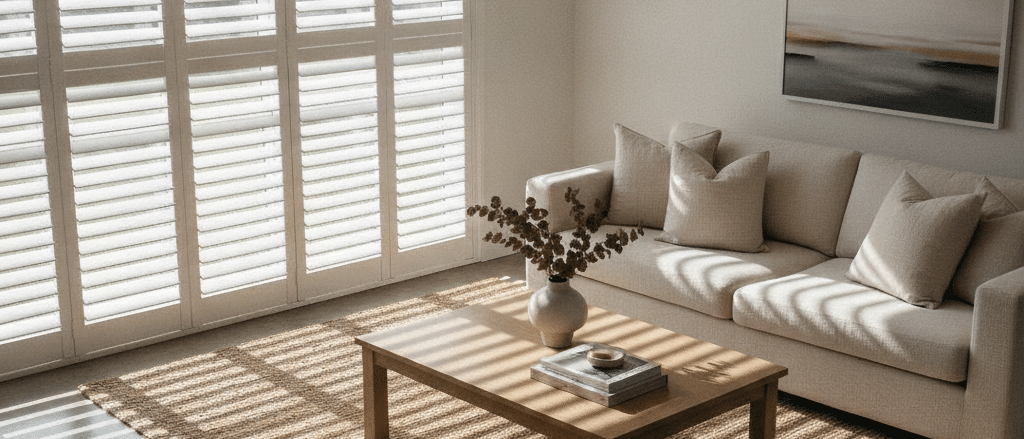
In living areas, composite shutters allow daylight into the room while giving you privacy from the street or nearby homes. They work well where you want the room to stay bright without leaving windows fully exposed.
Dining Areas
Composite shutters can suit dining rooms and open-plan spaces where you want a clean finish across multiple windows. They can help soften harsh light during bright parts of the day.
Home Offices
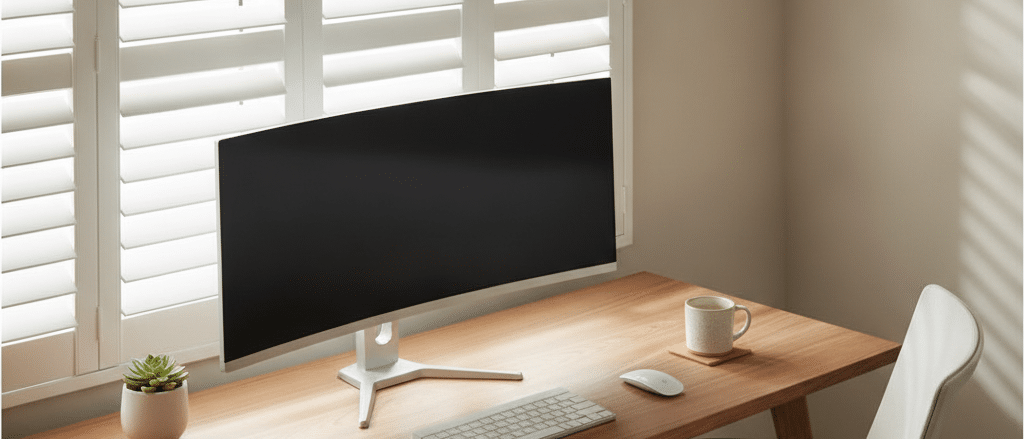
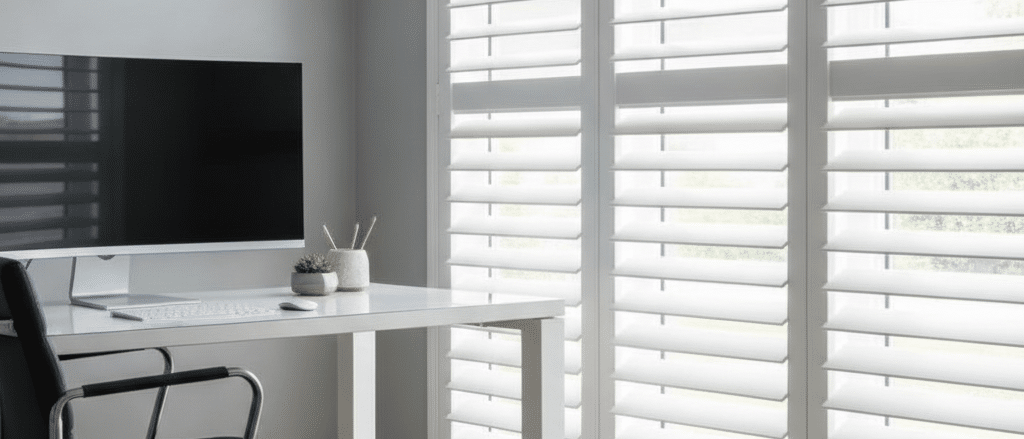
For home offices, composite shutters can help control glare on screens while keeping the room professional and uncluttered. Louvre adjustment makes it easier to manage changing light throughout the day.
Family Spaces
Composite shutters can be a practical choice for family rooms and high-use areas because they are easy to operate and keep tidy. They are often preferred where fabric window coverings may feel too soft, bulky or difficult to clean.
Selected Kitchens, Laundries and Damp Areas
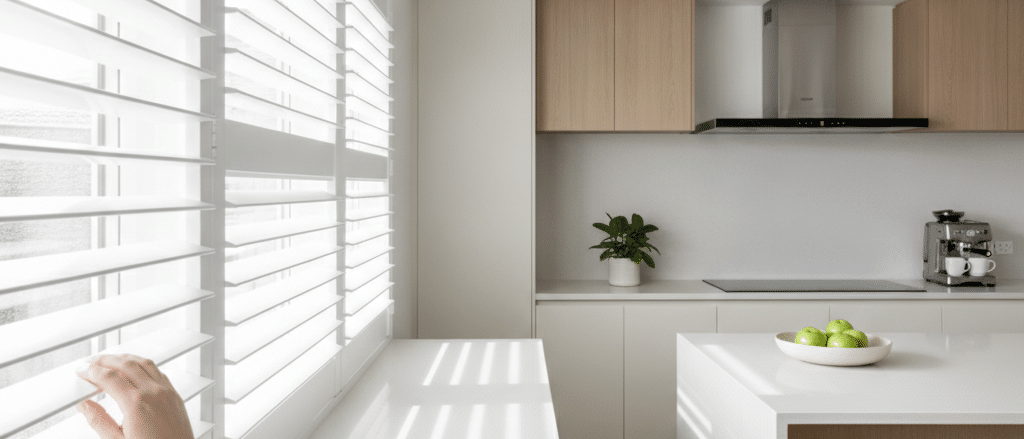
Some composite shutter options may suit kitchens, laundries or damp areas, but moisture suitability should always be checked before ordering. Not every composite material is suitable for wet or humid spaces.
Pros and Limitations
Pros
- Clean plantation shutter look
- Practical option for everyday rooms
- Good light and privacy control
- Can be more budget-friendly than some premium shutter materials
- Easy-to-wipe surfaces compared with fabric window coverings
- Suitable for bedrooms, living rooms, dining areas and home offices
Limitations
Composite shutters are not the right choice for every room or window. The exact material construction matters, especially in damp rooms, very large windows, sliding doors or areas exposed to strong sun and heat.
They may not have the same premium feel, grain or natural variation as timber shutters. They also may not be suitable for every large opening, wet area or covered outdoor space.
Like other shutter types, composite shutters are not usually a complete blackout product. They can reduce light and glare, but small gaps may remain around frames, panels and louvre edges.
Material and Style Notes
Composite shutters are made from engineered materials, which may include combinations of wood-based, synthetic or coated components depending on the product. The best choice depends on the room, window size, budget and exposure conditions.
- Whether the room is dry, damp or exposed to moisture
- How much direct sun the shutters will receive
- Whether the shutters are for standard windows or larger openings
- Whether the room needs a practical or more premium finish
- How often the shutters will be opened, closed or cleaned
- Whether the shutters need to match other rooms in the home
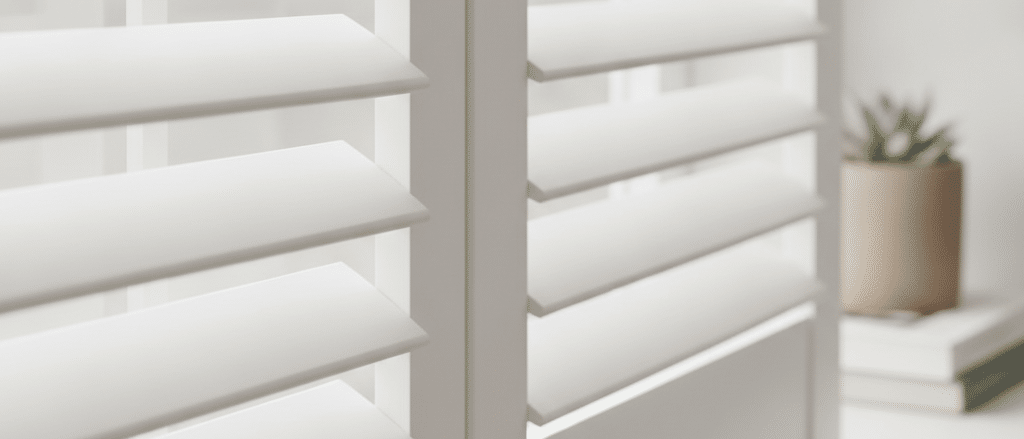
White and neutral finishes are often popular for composite shutters because they suit many interiors and help rooms feel bright. Louvre size also affects the final look. Larger louvres can feel more open and modern, while smaller louvres may suit more traditional windows or compact rooms.
Measuring and Installation Considerations
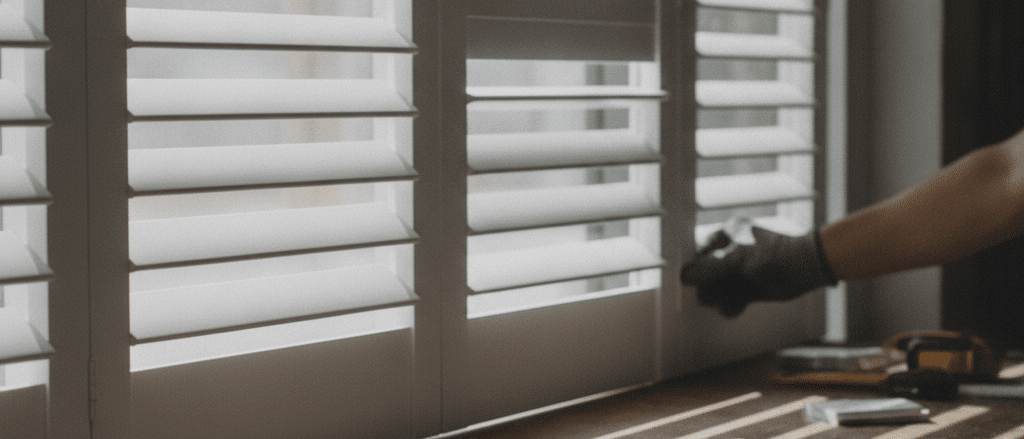
Composite shutters need accurate measurements so the frame, panels and louvres fit and operate properly. The best design depends on the window reveal, architraves, tiles, handles, security screens and available clearance.
Before requesting a price, you can use our measuring guide to understand what measurements may be needed.
For a rough starting point, the shutter calculator may also help if you want to estimate or compare before sending an enquiry.
Photos are useful when requesting advice because they show the window shape, surrounding walls, handle positions, room conditions and anything that may affect the shutter layout.
When Composite Shutters May Not Be the Best Option
Composite shutters may not be the best choice if you want a natural timber finish, have a very large or complex opening, or need shutters for a fully exposed outdoor area.
They may also be less suitable in bathrooms, laundries or damp rooms unless the product is confirmed as appropriate for that environment. Moisture exposure should not be guessed.
If you are unsure, it is better to ask for advice before choosing the shutter type. You can also compare other shutter options.
Quick Answer
Are composite shutters a good option?
Yes. Composite shutters can be a good option for many Sydney homes because they offer a clean plantation shutter look, practical light control and a durable everyday finish. They are commonly used in bedrooms, living rooms, dining rooms and home offices, but the best choice depends on window size, room conditions and moisture exposure.
Features and Benefits
- Engineered shutter material for practical everyday use
- Clean plantation shutter appearance
- Adjustable louvres for light, privacy and airflow control
- Suitable for bedrooms, living rooms, dining rooms and home offices
- Good option for street-facing windows and close-neighbour situations
- Easy-to-wipe finish compared with fabric curtains or blinds
- Available in popular neutral colours
- Can provide a value-focused alternative to some premium shutter materials
Composite Shutter Options
Material Construction
Composite shutters are made from engineered materials. Product construction can vary, so room suitability, moisture exposure and window size should be checked before ordering.
Finish and Colour
White, off-white and neutral tones are common choices because they suit many interiors and help rooms feel bright and clean.
Blade or Louvre Size
Louvre size affects the look, privacy and outside visibility. Larger louvres can feel more modern and open, while smaller louvres may suit traditional rooms or smaller windows.
Frame Options
Frame choice depends on the window reveal, architraves, tiles, handles and available clearance. The right frame helps the shutters operate properly and look neatly fitted.
Moisture Suitability
Moisture suitability should be confirmed before using composite shutters in bathrooms, laundries, kitchens or other damp areas. Not every composite shutter material is suited to humid rooms.
Light and Privacy Control
Adjustable louvres allow you to control daylight and privacy throughout the day. Composite shutters are useful for privacy but are not usually a complete blackout solution.
Cleaning and Maintenance
Composite shutters are generally easy to keep tidy with regular dusting and wiping using suitable cleaning methods. Cleaning needs may vary depending on the product and room conditions.
Indoor Suitability
Composite shutters are mainly used indoors. For outdoor, semi-outdoor or high-moisture areas, product suitability should be checked carefully before ordering.
FAQs About Composite Shutters
What are composite shutters?
Composite shutters are shutters made from engineered materials rather than solid timber. They are designed to provide a clean plantation shutter look with practical everyday performance.
Are composite shutters better than timber shutters?
Composite shutters are not simply better or worse than timber shutters. They are different. Composite shutters can be practical and value-focused, while timber shutters may be preferred for a lighter weight, natural finish or more premium feel. The best option depends on the room, window size and budget.
Are composite shutters good for bedrooms?
Yes. Composite shutters can be a good option for bedrooms because they provide privacy, adjustable light control and a clean built-in look. If strong room darkening is important, ask about frame and layout options before ordering.
Can composite shutters be used in bathrooms?
Some composite shutter products may be suitable for bathrooms, but this should always be confirmed before ordering. Bathrooms and laundries need careful material selection because of moisture and humidity.
Do composite shutters block out all light?
No. Composite shutters can reduce light and glare, but they are not usually a full blackout product. Small light gaps can occur around the frame, between panels or through louvre edges.
Are composite shutters suitable for large windows?
Composite shutters may suit some large windows, depending on the product, panel size and layout. Very large openings need careful design so the shutters remain practical to operate.
How do I get a price for composite shutters?
You can send your window sizes, photos and room details through the contact page. You can also review the measuring guide first if you want to prepare your measurements before requesting a price.
Get Advice or Request Your Shutter Price
Choosing the right composite shutters depends on your window size, room conditions, privacy needs, moisture exposure and budget.
Send us your measurements, photos and room details and we can help you work out whether composite shutters are a practical option for your Sydney home.