
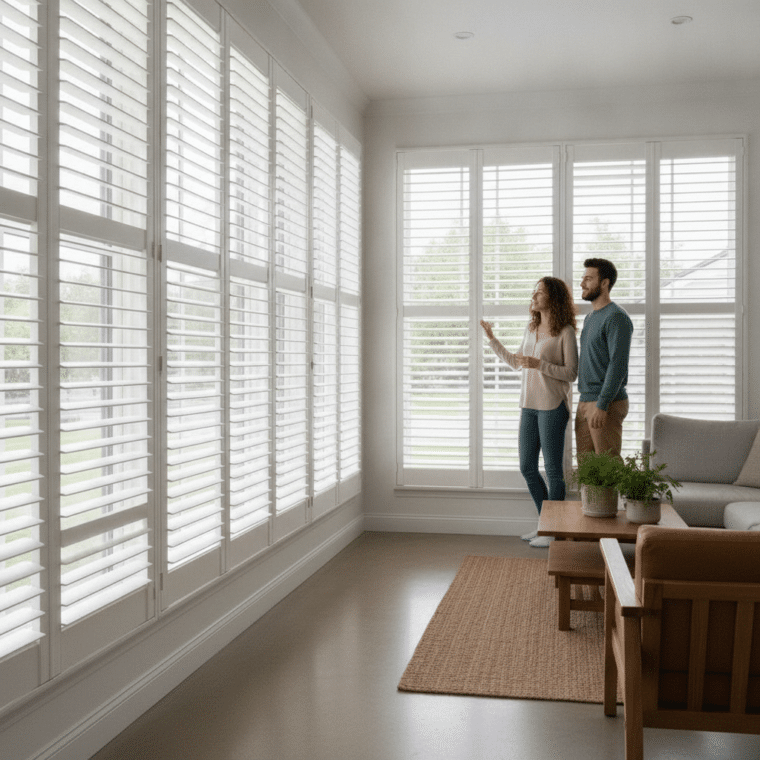
Understanding Plantation Shutter Tilt Rod Systems
When considering plantation shutters for your Sydney home, one of the most significant decisions, beyond material and colour, often revolves around the tilt rod system. This seemingly small detail profoundly impacts not only the aesthetic appeal of your windows but also how much natural light enters your living spaces and the clarity of your outdoor views. The two primary options available are Clearview tilt rods and Hidden tilt rods, each offering distinct advantages tailored to different preferences and home styles.
A tilt rod is the mechanism that allows you to open and close the louvers (slats) of your shutters, controlling light, privacy, and airflow. Traditionally, this rod is visible, running down the centre or side of the shutter panel. However, modern innovations have introduced the hidden tilt rod, which integrates the operating mechanism discreetly within the shutter frame or louvers themselves. Understanding the nuances of each system is crucial for making an informed choice that aligns with your lifestyle and design goals.
Clearview Tilt Rods: The Traditional Aesthetic
Clearview tilt rods, despite their name, refer to the traditional system where a visible rod is attached to the face of the louvers, typically running vertically along one side. This classic design has been a staple in homes for decades, offering a timeless and familiar look that complements a wide range of interior styles, from heritage to contemporary rustic.
The primary advantage of Clearview tilt rods lies in their straightforward operation and robust feel. Adjusting the louvers is as simple as grasping the rod and tilting it to the desired angle. This direct connection often provides a tangible sense of control and durability. For many Sydney homeowners, the visible rod is part of the charm, evoking a sense of traditional craftsmanship. It can also be a more budget-friendly option, making quality shutters accessible to a broader audience.
However, the visible nature of the Clearview rod does come with considerations. It creates a slight obstruction in your view when the louvers are open, breaking the clean lines of the window. While often minimal, this can be a factor for those prioritising an absolutely unobstructed outlook. Additionally, the rod itself can accumulate dust, requiring a little more effort during cleaning compared to a seamless surface.
Hidden Tilt Rods: Modern Elegance and Unobstructed Views
Hidden tilt rods represent a more contemporary approach to shutter design, prioritising sleek aesthetics and an unhindered view. With this system, the operating mechanism is ingeniously concealed within the side stile of the shutter panel or integrated directly into the louvers themselves. The result is a clean, uncluttered look that allows the beauty of the louvers and the view beyond to take centre stage.
The benefits of hidden tilt rod shutters are immediately apparent. The absence of a visible rod creates a sophisticated, minimalist aesthetic that is highly sought after in modern Australian homes. More importantly, it maximises the amount of natural light that can flood into your room when the louvers are open, as there’s no vertical element to cast a shadow or impede the light path. This is particularly beneficial for smaller rooms or those with limited natural light, where every ray counts. The unobstructed view also enhances the connection between your indoor and outdoor living spaces, a highly valued aspect of the Sydney lifestyle.
Operationally, hidden tilt rods are typically adjusted by gently grasping and tilting one of the louvers, which then simultaneously moves all connected louvers. While it may feel slightly different to the direct pull of a Clearview rod initially, most users find it intuitive and smooth. From a maintenance perspective, the absence of an external rod means fewer crevices for dust to settle, making cleaning a quicker and simpler task.
Maximising Light and Views: A Direct Comparison
The choice between Clearview and Hidden tilt rods fundamentally impacts how much light and the quality of the view you experience in your home. For Sydney homeowners, where natural light and a connection to the outdoors are highly valued, this decision warrants careful consideration.
With Clearview tilt rods, while the louvers themselves can be fully opened to allow light in, the visible rod introduces a vertical line that can subtly interrupt the flow of light and the clarity of your view. This is a minor point for some, adding to the character, but for others, it can be a visual distraction, especially when looking out at a scenic garden or city skyline. The rod can also create a very slight shadow line on the louvers themselves, which might be noticeable in certain lighting conditions.
Hidden tilt rod shutters, conversely, are specifically designed to maximise light entry and offer the clearest possible view. The absence of an external rod means that when the louvers are open, there is absolutely nothing to obstruct the light or your line of sight. This creates a much cleaner, more expansive feel in the room. For living areas, kitchens, or any space where you want to embrace natural light and the outdoor environment, hidden tilt rod shutters excel. They allow for an uninterrupted flow of light, making rooms feel brighter and more spacious, truly living up to the promise of “Hidden tilt rod shutters light” optimisation.
The Role of Louver Size in Light Optimisation
Beyond the tilt rod system, the size of your shutter louvers plays a crucial role in determining light entry and view clarity. Generally, wider louvers (e.g., 89mm or 114mm) allow more light to penetrate when open and offer a less obstructed view compared to narrower louvers (e.g., 63mm). When you combine wider louvers with a hidden tilt rod, you achieve the ultimate combination for maximising light and an expansive outlook.
Imagine a large window fitted with 114mm louvers and hidden tilt rods – when open, the effect is almost like having no shutters at all, just a beautifully framed view. Even with narrower louvers, the hidden tilt rod still provides a significant advantage over a visible rod by eliminating that central visual barrier, making the most of the available louver width for light and view.
Material Choices and Their Influence on Light and Durability
The material of your shutters also influences light reflection and overall aesthetics. While the tilt rod system dictates the mechanics of light entry, the material and its finish determine how that light interacts with your shutters. For instance, lighter coloured shutters, regardless of the tilt rod system, will reflect more natural light back into the room, enhancing brightness. Darker colours absorb more light, creating a cosier, more intimate atmosphere.
In Sydney’s varied climate, durability is a key concern. Materials like PVC and composite shutters are excellent choices for high-humidity areas or rooms exposed to direct sunlight, offering robust performance without warping or fading. Timber options, such as Basswood, provide a classic, natural aesthetic that can be stained or painted to complement any decor. Understanding the properties of different materials helps ensure your shutters not only look good but also stand the test of time, maintaining their ability to control light effectively for years to come. For a deeper dive into material options, explore our PVC vs Timber Plantation Shutters: Which is Best for Your Home? comparison.
Enhancing Privacy and Insulation with Your Choice
While maximising light and aesthetics is a primary concern, plantation shutters are also exceptional at providing privacy and contributing to home insulation. Both Clearview and Hidden tilt rod systems offer these benefits, but with subtle differences in their execution.
When fully closed, both types of shutters create an effective barrier against prying eyes, offering complete privacy. The tight closure of well-fitted shutters, regardless of the tilt rod, is key here. Hidden tilt rods, by removing the external rod, present a completely seamless and uniform surface when closed, which some homeowners find provides an even more robust and impenetrable sense of privacy. This clean facade also contributes to a more streamlined interior look, enhancing the feeling of a private sanctuary.
In terms of insulation, plantation shutters are renowned for their ability to help regulate indoor temperatures. They create an insulating layer between your windows and the room, reducing heat transfer. In Sydney’s hot summers, this means keeping your home cooler by blocking intense sunlight and trapping cooler air inside. In winter, they help retain warmth, reducing the need for excessive heating. The quality of the louver closure, which is facilitated by a well-engineered tilt rod mechanism, is vital for effective insulation. Both systems, when properly installed, contribute significantly to energy efficiency, helping you save on utility bills. The choice between Clearview and Hidden tilt rods doesn’t drastically alter the insulation properties, as the primary factor is the louver’s ability to close tightly and form a thermal barrier.
Operation and Maintenance Considerations
The long-term satisfaction with your plantation shutters often comes down to their ease of operation and maintenance. While both tilt rod systems are designed for durability, there are practical differences worth noting.
Clearview tilt rods are straightforward to operate; simply grasp the rod and move it up or down to adjust the louvers. This direct action is intuitive for everyone. Maintenance primarily involves regular dusting of the louvers and the rod itself. Because the rod is external, it can be a magnet for dust and requires a quick wipe down during cleaning routines.
Hidden tilt rod shutters are operated by gently tilting one of the louvers, which then activates the internal mechanism to move all connected louvers in unison. This motion is smooth and responsive. From a cleaning perspective, hidden tilt rods are often preferred. With no external rod, there are fewer surfaces and crevices for dust to accumulate, making the louvers easier and quicker to wipe clean. This can be a significant advantage for busy Sydney households or those with allergies, as it contributes to a cleaner indoor environment.
Both systems are generally durable, but like any mechanical component, the internal mechanisms of hidden tilt rods are more complex than a simple external rod. However, reputable manufacturers use high-quality components to ensure longevity and smooth operation for many years. It’s always advisable to choose a supplier that offers robust warranties and after-sales support for peace of mind. For a look at the quality and variety of our offerings, check out our range of plantation shutters.
Making the Right Choice for Your Sydney Home
Deciding between Clearview and Hidden tilt rods ultimately comes down to a balance of aesthetic preference, functional priorities, and budget. There’s no single “best” option; rather, it’s about choosing the system that best suits your home’s unique character and your personal lifestyle.
- Aesthetic Preference: If you appreciate a classic, traditional look with visible hardware, Clearview might be your preference. If you lean towards modern, minimalist, and sleek designs that maximise an unobstructed view, hidden tilt rods are likely the better choice.
- Light and View Maximisation: For those who prioritise an absolute maximum of natural light and an unhindered view, especially with wider louvers, hidden tilt rods are superior. They truly deliver on the promise of “Hidden tilt rod shutters light” optimisation.
- Budget: Clearview tilt rods can sometimes be a more cost-effective option, making them an attractive choice for homeowners on a tighter budget who still want the quality and benefits of plantation shutters. Hidden tilt rods, due to their more complex internal mechanism, may come at a slightly higher price point.
- Ease of Cleaning: If ease of cleaning is a high priority, the smooth, rod-free surface of hidden tilt rod shutters offers a distinct advantage.
- Room Function: Consider the room. For a formal living room or bedroom where a clean, sophisticated look is paramount, hidden tilt rods might be preferred. For a more casual space or a home with a heritage feel, Clearview could be perfectly suited.
Ultimately, visiting a showroom or viewing examples of both systems in person can be incredibly helpful. Seeing how each operates and how they look within a window setting will provide the clearest insight into which option will enhance your Sydney home most effectively.
Frequently Asked Questions About Hidden Tilt Rod Shutters Light
Q1: Do hidden tilt rods allow more light into a room?
Yes, hidden tilt rods generally allow more light into a room compared to Clearview tilt rods. The absence of a visible vertical rod means there’s no obstruction to the light path when the louvers are open, creating a clearer, more expansive window opening. This maximises the amount of natural light that can enter your space, making rooms feel brighter and more open.
Q2: Are hidden tilt rod shutters more difficult to operate?
No, hidden tilt rod shutters are not inherently more difficult to operate. While the mechanism is different from a visible rod (you typically tilt a louver directly to adjust all others), it is designed to be smooth and intuitive. Most users quickly adapt to the operation, finding it just as easy, if not easier, to use than traditional systems once accustomed to the motion.
Q3: Are hidden tilt rod shutters more expensive?
Hidden tilt rod shutters can sometimes be slightly more expensive than Clearview options. This is due to the more complex internal engineering required to conceal the tilt mechanism within the shutter frame or louvers. However