
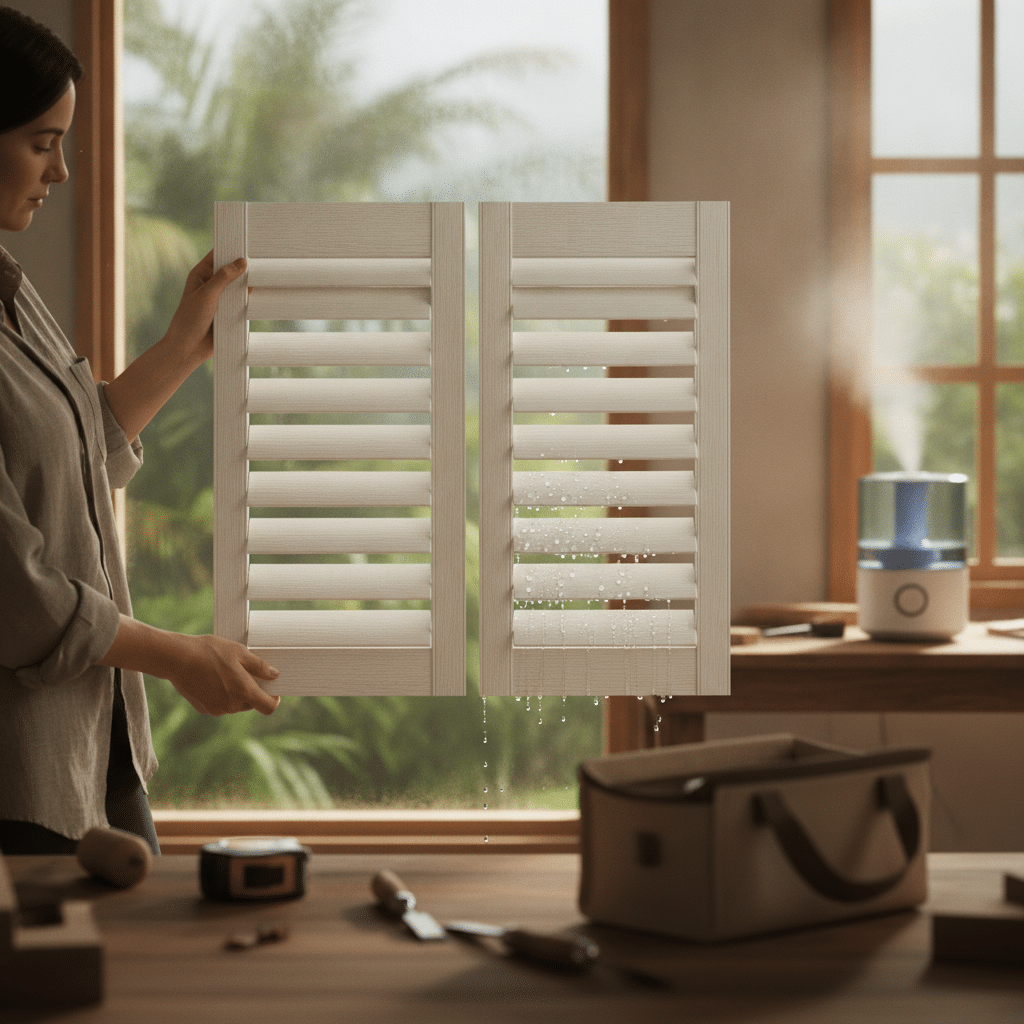
How Durable Are Faux Wood Shutters in High-Humidity Areas?
Sydney homeowners know all too well the challenges that high humidity can pose for interior furnishings. From sticky summers to damp winters, the coastal climate can be unforgiving on materials, particularly those made from natural wood. When it comes to window coverings, the question of durability in these conditions is paramount. Faux wood shutters have emerged as a popular choice, often touted for their resilience. But how well do they truly stand up to Sydney’s demanding humidity?
This comprehensive guide delves into the durability of faux wood shutters, specifically focusing on their performance in high-humidity environments. We’ll explore their material composition, practical benefits, and compare them to other options, helping you make an informed decision for your Sydney home.
The Sydney Climate Challenge: Why Humidity Matters for Shutters
Sydney’s climate is characterised by warm, humid summers and mild, sometimes damp, winters. This consistent presence of moisture in the air can wreak havoc on traditional window furnishings. Natural timber, for instance, is hygroscopic, meaning it absorbs and releases moisture, leading to common issues like:
- Warping and Cupping: Changes in moisture content can cause wood to twist, bend, or cup, compromising the shutter’s fit and appearance.
- Cracking and Splitting: Rapid changes in humidity can cause the wood to dry out too quickly or swell excessively, leading to stress and damage.
- Mould and Mildew Growth: Porous wood surfaces in damp conditions create an ideal breeding ground for mould and mildew, affecting air quality and aesthetics.
- Peeling Paint or Finish: Moisture can penetrate the finish, causing it to bubble, peel, or discolour over time.
Understanding these challenges is crucial when selecting window treatments that will maintain their beauty and functionality for years to come in a Sydney home.
What Are Faux Wood Shutters Made Of? Understanding the Materials
The secret to faux wood shutters’ durability lies in their advanced material composition, designed specifically to counteract the issues faced by natural wood.
PVC and Composite Construction
Faux wood shutters are typically manufactured from high-grade PVC (Polyvinyl Chloride) or a composite material. PVC shutters are essentially solid, extruded PVC, which is a type of plastic. Composite shutters, on the other hand, often feature a core of engineered wood or MDF (Medium Density Fibreboard) encapsulated in a durable polymer coating, usually PVC or polypropylene.
Both types are engineered to mimic the look and feel of natural timber, complete with realistic grain textures and a range of paint and stain finishes, but without the inherent vulnerabilities of wood.
The Key to Humidity Resistance
The non-porous nature of PVC and the protective polymer coating on composite materials are the fundamental reasons for their superior performance in humid conditions. Unlike natural timber, these materials do not absorb moisture from the air. This impermeability prevents the swelling, shrinking, warping, and cracking that are common problems for wood shutters in damp environments.
This makes them an ideal choice for any room in a Sydney home, especially those prone to higher moisture levels like bathrooms, laundries, and kitchens, where the air can be consistently damp.
Unpacking Durability: Faux Wood Shutters in Action
Let’s break down the specific aspects of durability that make faux wood shutters a robust option for high-humidity areas.
Exceptional Resistance to Moisture
As discussed, the primary benefit of faux wood shutters is their inherent resistance to moisture. They are virtually waterproof, meaning they won’t absorb humidity from the air or direct splashes. This quality is invaluable for areas like bathrooms, where steam and condensation are daily occurrences, ensuring the shutters maintain their structural integrity and appearance over time.
Stability Against Warping, Cracking, and Peeling
One of the biggest frustrations with natural timber in humid climates is its tendency to warp or crack. Faux wood shutters are engineered to be dimensionally stable. This means they will not expand, contract, or deform due to fluctuations in temperature or humidity. Their consistent form ensures that louvres operate smoothly, panels open and close correctly, and the overall fit remains tight and effective for years, avoiding unsightly gaps or misalignment.
Mould, Mildew, and Pest Deterrence
Because faux wood materials are inorganic and non-porous, they do not provide a food source or a suitable environment for mould, mildew, or fungi to grow. This is a significant advantage in humid Sydney homes, where these issues can be a constant battle with other materials. Furthermore, unlike timber, faux wood shutters are impervious to common household pests like termites, offering an additional layer of long-term protection and peace of mind.
UV Stability for Long-Lasting Appearance
Sydney’s strong sun can be as damaging as its humidity, causing colours to fade and materials to degrade. Modern faux wood shutters are typically treated with UV inhibitors during their manufacturing process. This ensures that their colour remains vibrant and consistent, resisting fading, yellowing, or discolouration even with prolonged exposure to direct sunlight. This UV stability contributes significantly to their overall longevity and aesthetic appeal.
Beyond Durability: Practical Benefits for Sydney Homes
While durability is a key factor, faux wood shutters offer a range of other practical advantages that make them a smart choice for Sydney homeowners.
Low Maintenance and Easy Cleaning
Unlike timber shutters that may require special cleaning products or occasional refinishing, faux wood shutters are incredibly easy to maintain. A simple wipe down with a damp cloth is usually all that’s needed to remove dust and grime, keeping them looking pristine. This low-fuss maintenance is a major draw for busy households.
Enhanced Insulation and Energy Efficiency
Faux wood shutters offer excellent insulation properties. Their solid construction helps to create an effective barrier against external temperatures, keeping your home cooler in summer and warmer in winter. This can lead to noticeable reductions in energy consumption and lower utility bills, making them an environmentally conscious and cost-effective choice.
Superior Light Control and Privacy
Like all plantation shutters, faux wood versions provide exceptional control over light and privacy. The adjustable louvres allow you to precisely direct natural light, reduce glare, and block out the sun’s harsh rays, all while maintaining privacy. They offer a level of versatility that blinds and curtains often cannot match.
Budget-Friendly and Long-Term Value
Generally, faux wood shutters are more affordable than their natural timber counterparts, offering significant upfront savings. When combined with their exceptional durability, low maintenance, and energy-saving benefits, they represent excellent long-term value. Their extended lifespan means you won’t need to replace them as frequently as other window coverings, further enhancing their cost-effectiveness.
Faux Wood vs. Other Popular Shutter Materials
To truly appreciate the value of faux wood, it’s helpful to compare it with other common shutter materials.
Faux Wood vs. Natural Timber
This is the most direct comparison. While natural timber offers unmatched aesthetic warmth and character, it comes with the aforementioned vulnerabilities to humidity, requiring more careful maintenance and often a higher initial investment. Faux wood shutters mimic the look of timber but excel in moisture resistance, making them superior for wet areas and high-humidity climates like Sydney’s. They are also typically more budget-friendly and easier to maintain.
Faux Wood vs. Aluminium
Aluminium shutters are incredibly durable and often used for external applications due to their strength and weather resistance. For internal use, however, faux wood shutters generally provide better insulation and a warmer, more traditional aesthetic. Aluminium can also be prone to condensation in certain conditions and may not offer the same level of sound insulation. Faux wood is usually preferred for internal living spaces where comfort and aesthetics are key.
Faux Wood vs. Vinyl (PVC)
Often, the terms “faux wood” and “PVC” shutters are used interchangeably because many faux wood shutters are indeed made from PVC. If there’s a distinction, it might be that “faux wood” can sometimes refer to composite materials with a wood core, while “PVC” strictly refers to solid plastic. Both, however, share the core benefits of moisture resistance, durability, and low maintenance, making them excellent choices for humid environments.
Choosing and Caring for Your Faux Wood Shutters
Selecting the Right Style and Finish
When selecting faux wood shutters, consider the style of your home and the specific room. They come in various colours