
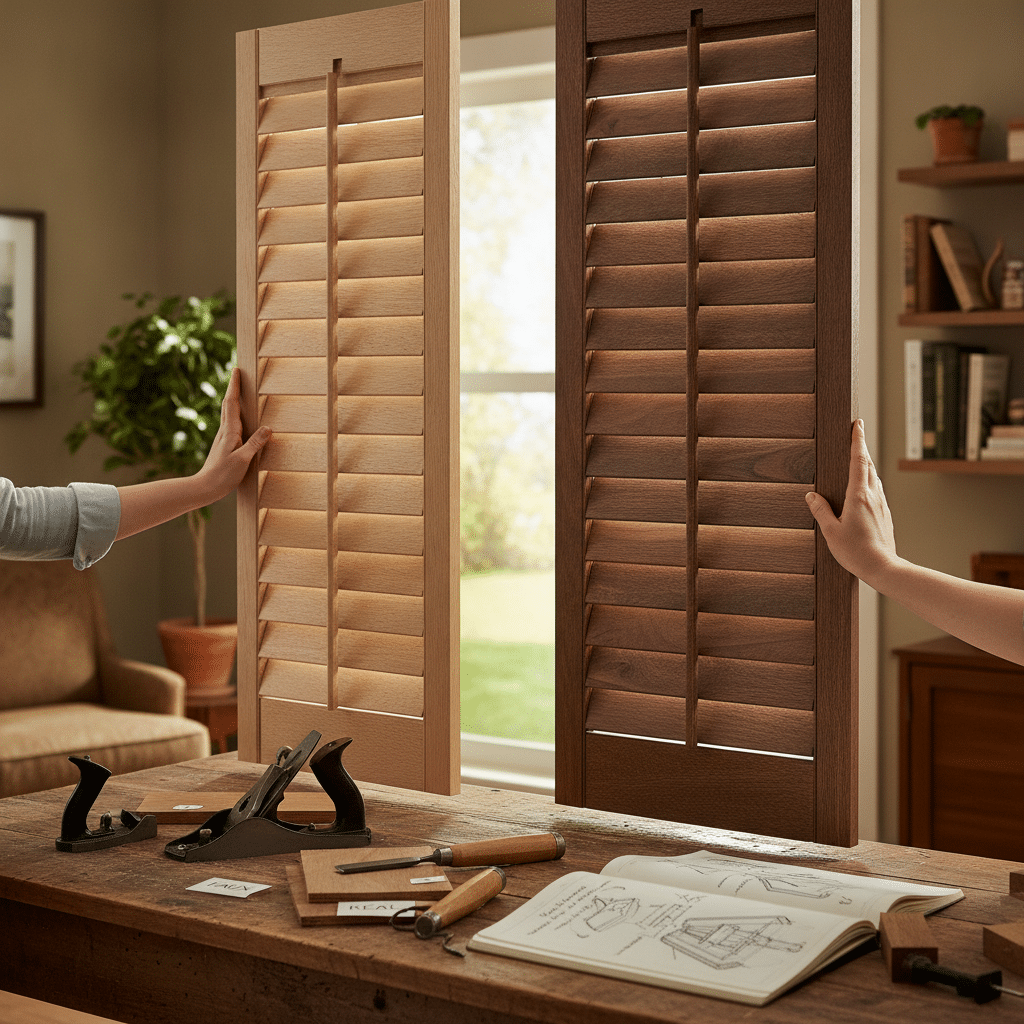
Faux Wood vs Real Wood Shutters: A Detailed Room-by-Room Guide for Sydney Homes
Choosing the right window coverings can significantly impact your home’s aesthetics, comfort, and long-term value. For Sydney homeowners considering the timeless appeal of plantation shutters, a common dilemma arises: should you opt for the classic elegance of real wood or the practical resilience of faux wood? Both options offer distinct advantages and considerations, especially when tailored to specific rooms within your home.
This comprehensive guide will delve into the practicalities of faux wood and real wood shutters, comparing their material properties, light control capabilities, insulation benefits, and maintenance requirements. We’ll provide a room-by-room breakdown to help you make an informed, budget-conscious decision that perfectly suits your lifestyle and the unique demands of each space.
Understanding the Material Differences
Real Wood Shutters (Timber)
Typically crafted from lightweight yet durable timbers like Basswood, real wood shutters are celebrated for their natural beauty and authentic grain. They offer a premium aesthetic that can enhance the value and character of any home. Real wood is highly customisable, allowing for a vast array of stains and paint finishes to match existing décor seamlessly. Its natural properties also make it an excellent insulator.
- Pros: Superior aesthetic appeal, lightweight, excellent natural insulation, wide range of customisation options (stains, paints), ideal for large windows due to lighter weight, sustainable choice when sourced responsibly.
- Cons: More susceptible to moisture, humidity, and direct sunlight, which can lead to warping, cracking, or fading over time. Generally higher cost and requires more careful maintenance in certain environments.
For a deeper dive into premium timber options, explore Why Basswood is the Premium Choice for Sydney Plantation Shutters.
Faux Wood Shutters (Composite/PVC)
Faux wood shutters, often made from PVC or composite materials, are engineered to mimic the look of real timber while offering enhanced durability and resistance to environmental factors. They are particularly well-suited for areas prone to moisture and high humidity, making them a popular choice in Australian homes. While they may not offer the exact same natural grain as real wood, modern manufacturing has significantly improved their aesthetic appeal.
- Pros: Highly resistant to moisture, humidity, and UV damage, making them ideal for wet areas. Extremely durable and easy to clean, generally more affordable than real wood, excellent for light control and privacy.
- Cons: Can be heavier than real wood, which might limit their suitability for very wide windows or certain mounting styles. Less natural texture and grain compared to real timber. Limited customisation in terms of stains, primarily available in painted finishes.
For a comprehensive comparison of these materials, consider reading PVC vs Timber Plantation Shutters: Which is Best for Your Home?
Room-by-Room Guide: Choosing the Right Shutters
Living Rooms & Dining Rooms
These are often the focal points of your home, where aesthetics and ambiance play a significant role.
Aesthetics and Ambiance
Real Wood: For a sophisticated, warm, and classic look, real timber shutters are often the preferred choice. Their natural grain and ability to be stained to match furniture or flooring can create a cohesive and luxurious feel. They add an undeniable touch of elegance that many homeowners desire for their main entertaining spaces.
Faux Wood: Modern faux wood shutters can closely replicate the painted look of real timber, offering a clean, crisp aesthetic. If your décor leans towards contemporary or minimalist, or if you prefer a uniform white finish throughout your home, faux wood can be an excellent, budget-friendly option that still looks fantastic.
Light Control and Insulation
Both materials offer excellent light control, allowing you to easily adjust louvres for privacy or to let in natural light. Both also provide good insulation, helping to keep your living and dining areas comfortable year-round, reducing reliance on heating and cooling systems.
Durability
In living and dining rooms, shutters generally face less wear and tear than in high-traffic or wet areas. Both materials are durable enough for these spaces, but real wood will require protection from prolonged direct sunlight to prevent fading or warping over many years.
Bedrooms
Bedrooms require a balance of privacy, light control, and insulation to create a comfortable and restful environment.
Privacy and Light Blockout
Both real wood and faux wood shutters excel at providing superior privacy and light blockout compared to other window treatments. When the louvres are closed, they offer a solid barrier against outside views and light, crucial for a good night’s sleep. The precise control of the louvres also allows you to filter light gently in the morning.
Insulation and Comfort
Both types of shutters contribute significantly to thermal insulation, helping to keep bedrooms cooler in Sydney’s summer and warmer in winter. This can lead to energy savings and a more comfortable sleeping environment. Real timber, being a natural insulator, has a slight edge in this regard.
Noise Reduction
The solid construction of both real and faux wood shutters also offers a degree of noise reduction, which can be a welcome benefit in urban or noisy areas, contributing to a more peaceful sanctuary.
Kitchens
The kitchen is a hub of activity, often exposed to steam, cooking fumes, and occasional splashes, demanding robust and easy-to-clean window coverings.
Moisture and Durability
Faux Wood: This is where faux wood shutters truly shine. Their inherent resistance to moisture and humidity makes them ideal for kitchens. They won’t warp, crack, or peel from steam or splashes, and grease marks can be easily wiped away. This makes them a highly practical and low-maintenance choice for busy kitchens.
Real Wood: While beautiful, real wood shutters are generally not recommended for direct proximity to sinks, cooktops, or dishwashers where they might be exposed to high moisture or direct splashes. Over time, these conditions can compromise the timber’s integrity and finish. If real wood is desired, ensure good ventilation and placement away from direct moisture sources.
Cleaning
Both types of shutters are relatively easy to clean with a damp cloth, but faux wood’s water resistance gives it an advantage in a kitchen environment where more frequent or vigorous cleaning might be necessary.
Bathrooms & Laundries
These are high-humidity zones where water resistance is paramount.
Water Resistance and Longevity
Faux Wood: For bathrooms and laundries, faux wood (especially PVC) shutters are the undisputed champions. They are completely waterproof and impervious to the high humidity, steam, and splashes common in these areas. They will not swell, warp, or grow mould, ensuring they look great and function perfectly for years, even in the most humid conditions. For Sydney bathrooms, this is often the only practical choice.
Real Wood: Real wood shutters are not suitable for bathrooms or laundries due to their susceptibility to moisture damage. The constant exposure to humidity will inevitably lead to warping, cracking, and potential mould growth, significantly shortening their lifespan and compromising their appearance. We strongly recommend against timber shutters in these wet areas.
To understand why, read Why Waterproof PVC Shutters are Mandatory for Sydney Bathrooms.
Cleaning and Hygiene
Faux wood shutters are incredibly easy to clean and maintain in wet areas. A simple wipe-down with a damp cloth is usually sufficient to keep them pristine and hygienic, resisting soap scum and mildew.
Children’s Rooms & Play Areas
Durability, safety, and ease of cleaning are key considerations here.
Durability and Resilience
Faux Wood: Faux wood shutters are an excellent choice for children’s rooms. Their robust construction makes them highly resistant to knocks, bumps, and general wear and tear from active kids. They are also easy to clean, meaning crayon marks or sticky fingerprints can be wiped away without fuss.
Real Wood: While durable, real wood shutters can be more susceptible to scratches or dents from toys or rough play. They also require more care with cleaning, as harsh chemicals or excessive moisture could damage the finish.
Safety
Both types of plantation shutters are inherently child-safe as they are cord-free, eliminating the strangulation hazards associated with blinds and curtains. Their sturdy construction also means they are less likely to be pulled down or damaged by curious hands.
Key Considerations Beyond the Room
Budget and Cost-Effectiveness
Generally, faux wood shutters are more affordable than real wood shutters, making them an attractive option for budget-conscious homeowners, especially when furnishing multiple windows or larger homes. While the initial investment for real wood is higher, its longevity and aesthetic appeal can be seen as a long-term value addition.
Maintenance and Cleaning
Faux wood shutters are exceptionally low maintenance. They can be easily wiped clean with a damp cloth and mild detergent, requiring no special care. Real wood shutters also require minimal cleaning, typically a dusting or a gentle wipe, but they may need occasional re-finishing or touch-ups over many years, particularly if exposed to harsh elements.
Insulation and Energy Efficiency
Both real wood and faux wood shutters provide excellent insulation, helping to regulate indoor temperatures and reduce energy consumption. Real timber, being a natural material, offers superior thermal properties, though modern faux wood shutters are also highly effective at preventing heat transfer.
Aesthetics and Style Versatility
Real wood offers a timeless, classic look with natural variations and a warmth that faux wood, despite its advancements, cannot perfectly replicate. It’s ideal for traditional, rustic, or high-end luxury interiors. Faux wood provides a consistent, clean finish, perfect for modern, contemporary, or coastal Sydney homes where a crisp, uniform appearance is desired.
Durability and Lifespan
Faux wood shutters excel in durability, particularly in challenging environments like wet areas or those with high sun exposure. They are designed to resist warping, cracking, and fading. Real wood shutters are also very durable but require more careful placement and maintenance to preserve their integrity and beauty over their long lifespan, especially from direct moisture or intense UV rays.
Making Your Decision
Ultimately, the choice between faux wood and real wood shutters for your Sydney home hinges on a combination of factors: your budget, the specific needs of each room, your aesthetic preferences, and your willingness to maintain them. For areas exposed to moisture and high humidity, faux wood is the clear winner. For living spaces where natural beauty and a premium feel are paramount, real wood often takes precedence. Consider your priorities for each space, weigh the pros and cons, and you’ll find the perfect shutter solution for your home.
To see examples of our work and gather inspiration, visit our Our Work page.
Frequently Asked Questions (FAQ)
Are faux wood shutters suitable for all rooms in a Sydney home?
Yes, faux wood shutters are highly versatile and suitable for almost any room in a Sydney home, including high-humidity areas like bathrooms and laundries where real wood is not recommended. Their durability and moisture resistance make them a practical choice throughout the house.
Do real wood shutters require more maintenance than faux wood?
<