
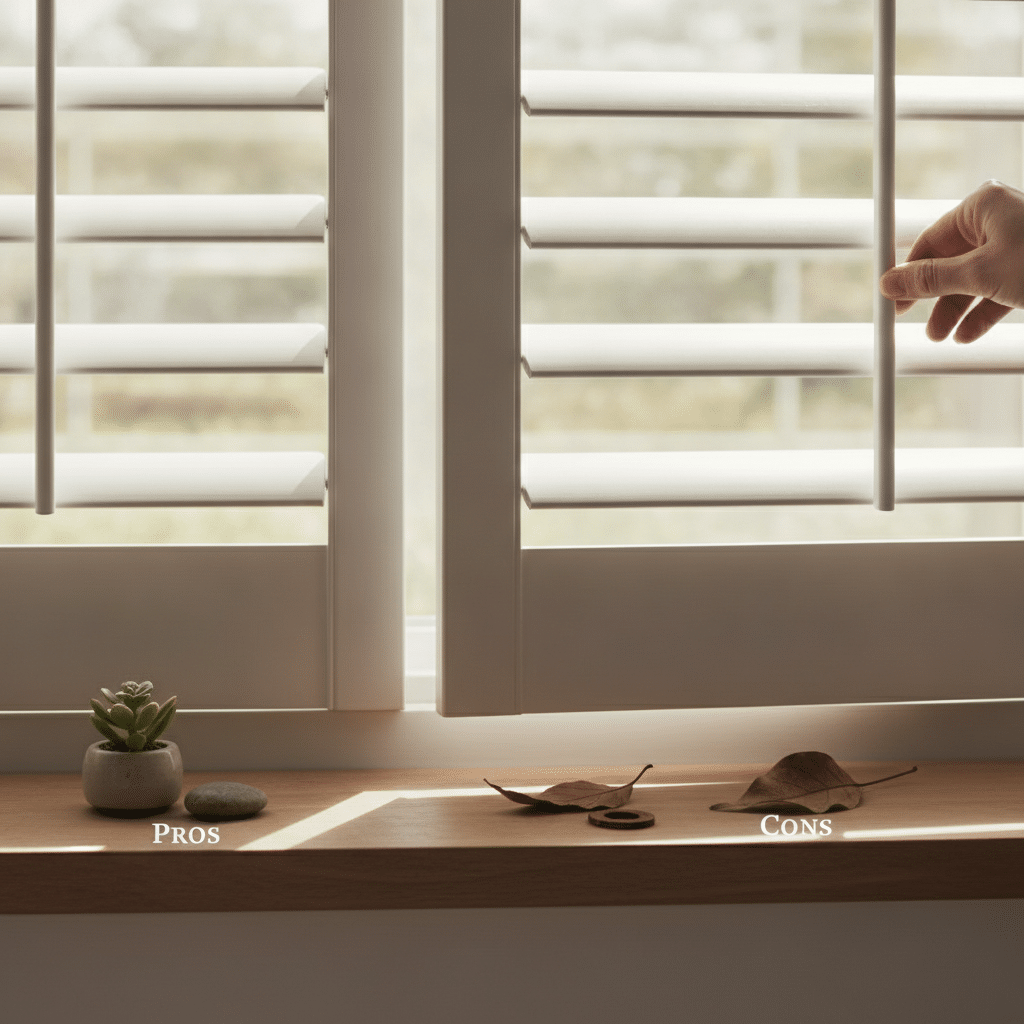
Polyvinyl Plantation Shutters: Honest Pros and Cons for Homeowners
Polyvinyl (PVC) plantation shutters have become a popular choice for Sydney homeowners seeking a balance between style, durability, and affordability. As a practical and often budget-conscious option, they offer a compelling alternative to traditional timber. This comprehensive guide will delve into the honest advantages and disadvantages of polyvinyl shutters, helping you determine if they are the right fit for your home’s unique needs and the local climate.
What Are Polyvinyl Plantation Shutters?
Polyvinyl plantation shutters are a type of window covering made from a synthetic polymer material, specifically polyvinyl chloride (PVC). Unlike natural timber, PVC is engineered for specific performance characteristics, making it highly suitable for certain environments and applications within a home.
Material Breakdown: Understanding PVC
At their core, polyvinyl shutters are crafted from solid PVC, sometimes with an aluminium core for added stability, especially in wider panels. This construction gives them a consistent, uniform finish that mimics the look of painted timber, but with inherent properties that timber does not possess. They are designed to be robust and withstand various environmental factors without degrading.
Why They’re Popular in Sydney
Sydney’s climate, with its coastal humidity and sometimes intense sun, presents unique challenges for window furnishings. Polyvinyl shutters address many of these concerns directly. Their resistance to moisture and ease of maintenance, combined with a more accessible price point than premium timber options, makes them a practical and attractive solution for many local properties, from family homes to investment apartments.
The Honest Pros of Polyvinyl Shutters
When considering window furnishings, understanding the benefits of polyvinyl shutters can highlight why they’re such a strong contender for many Sydney homeowners.
Exceptional Durability and Longevity
Polyvinyl shutters are renowned for their hard-wearing nature. They are highly resistant to common issues that can plague other materials, such as chipping, cracking, warping, and denting. This inherent toughness means they maintain their appearance and functionality for many years, even in busy households or areas prone to wear and tear.
Waterproof and Humidity Resistant
This is arguably the greatest strength of polyvinyl shutters, particularly relevant for Sydney’s humid climate. Unlike timber, PVC is completely impervious to water. This makes them the ideal choice for wet areas such as bathrooms, laundries, and kitchens, where splashes and high moisture levels are common. You can learn more about their suitability for these spaces by reading Why Waterproof PVC Shutters are Mandatory for Sydney Bathrooms.
Low Maintenance
Keeping polyvinyl shutters looking pristine is remarkably easy. They don’t require special cleaning agents, polishing, or periodic repainting like some timber options. A simple wipe down with a damp cloth is usually sufficient to remove dust and grime, making them a time-saving solution for busy homeowners.
Cost-Effective Solution
For those working with a budget, polyvinyl shutters often represent a more affordable entry point into the world of plantation shutters compared to their timber counterparts. This allows homeowners to achieve the elegant look and functional benefits of shutters without a significant financial outlay, making them an excellent value proposition.
Excellent Light and Privacy Control
Like all plantation shutters, polyvinyl options offer superior control over light and privacy. The adjustable louvres allow you to precisely angle the light entering a room, from completely open to fully closed. This flexibility helps manage glare, protect furnishings from UV rays, and ensure privacy when needed, enhancing comfort and usability in any space.
Good Insulation Properties
Polyvinyl is a good insulator, meaning these shutters can contribute to better temperature regulation within your home. By creating a barrier at the window, they help to reduce heat transfer, keeping your home cooler in summer and warmer in winter. This can potentially lead to modest energy savings by reducing reliance on air conditioning and heating systems.
Versatile Aesthetic
Polyvinyl shutters are typically available in a range of classic white and neutral tones, offering a clean, crisp, and timeless aesthetic that complements almost any interior design style. They provide the sophisticated look of traditional plantation shutters, adding a touch of elegance and increasing the perceived value of your home.
The Honest Cons of Polyvinyl Shutters
While polyvinyl shutters offer many advantages, it’s important to be aware of their potential drawbacks to make an informed decision for your Sydney home.
Weight
Polyvinyl is a denser material than most timbers used for shutters. This means that PVC shutter panels can be noticeably heavier. For very wide windows or large openings, this added weight can sometimes limit panel size or necessitate more robust framing and hinges, and they might feel heavier to operate.
Heat Retention and Expansion
In areas exposed to prolonged, intense direct sunlight, polyvinyl can absorb and retain heat. While generally stable, extreme heat can, in rare cases, lead to slight expansion or a minimal degree of bowing over time if not properly manufactured and installed, particularly in very large panels without an aluminium core. This is a crucial consideration for west-facing windows or sunrooms.
Limited Colour and Finish Options
Compared to timber shutters, which can be stained or painted in virtually any colour, polyvinyl shutters typically come in a more restricted palette of whites and off-whites. While these classic colours suit most decors, homeowners seeking a specific timber grain look or a bold custom colour might find their options limited.
Less “Natural” Feel
For those who appreciate the organic beauty, unique grain patterns, and inherent warmth of natural wood, polyvinyl shutters, being a synthetic product, may lack that specific tactile and visual appeal. While they mimic the look of painted timber well, they don’t offer the same natural texture or character.
Environmental Considerations
As a plastic product, PVC has environmental implications regarding its production and end-of-life disposal. While manufacturers are increasingly focusing on sustainable practices and recycling, some homeowners prefer natural, renewable materials like timber for their eco-friendliness.
Material Comparison: Polyvinyl vs. Other Options
Understanding how polyvinyl stacks up against other popular shutter materials is key to making the best choice for your Sydney home.
Polyvinyl vs. Timber
The choice between polyvinyl and timber is often the most common dilemma. Timber shutters, particularly those made from Basswood, offer a classic, premium aesthetic with lightweight panels and extensive customisation options for stains and paints. However, they are generally more expensive, require more maintenance, and are not suitable for wet areas. Polyvinyl excels in durability, water resistance, and cost-effectiveness, making it a practical alternative where timber’s natural properties might be a disadvantage. For a deeper dive, consider reading PVC vs Timber Plantation Shutters: Which is Best for Your Home?
Polyvinyl vs. Aluminium
Aluminium shutters are primarily designed for outdoor use due to their extreme durability, weather resistance, and security features. While polyvinyl can be used indoors in almost any room, it’s not typically recommended for external applications where aluminium shines. The two materials serve different primary purposes, with polyvinyl being an indoor specialist and aluminium dominating the outdoor market.
Where Do Polyvinyl Shutters Shine?
Given their unique properties, certain areas and applications within a Sydney home are particularly well-suited for polyvinyl shutters.
Bathrooms, Kitchens, and Laundries
These are the prime locations for polyvinyl shutters. Their complete waterproof nature means they won’t warp, swell, or peel in high-humidity environments or when exposed to splashes. This ensures longevity and maintains their pristine appearance in the wettest parts of your home.
High-Traffic Areas
In family homes or areas with frequent use, polyvinyl’s durability and resistance to knocks and bumps make them an excellent choice. They can withstand the rigours of daily life without showing signs of wear and tear quickly, making them a practical option for living rooms, playrooms, or hallways.
Budget-Conscious Projects
For homeowners looking to achieve the elegant look of plantation shutters across multiple windows or within a specific budget, polyvinyl offers an attractive and cost-effective solution. They provide significant aesthetic and functional benefits without the premium price tag often associated with timber. Explore our range of Products to see various options.