
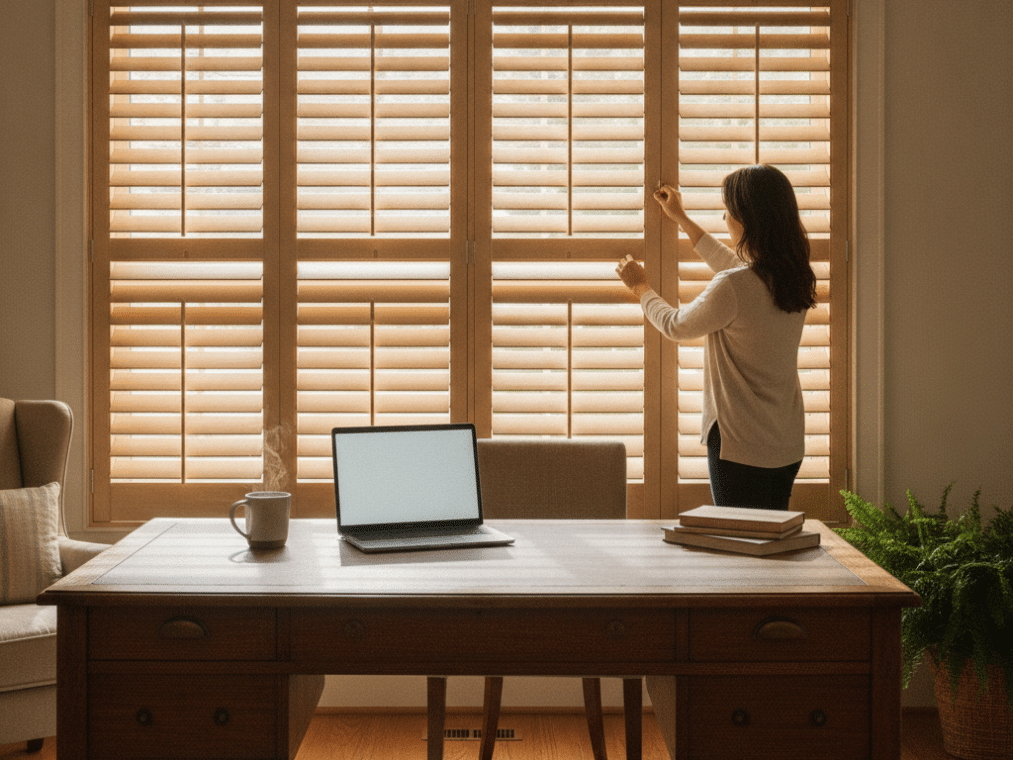
Max Privacy: How to Adjust Street-Facing Plantation Shutters
For Sydney homeowners, the desire for privacy in street-facing rooms is a common concern. Whether you live on a bustling suburban street or in a quieter cul-de-sac, the ability to control who can see into your home, especially during different times of the day, is paramount. Plantation shutters offer an elegant and highly effective solution, providing not just aesthetic appeal but also exceptional light control and, crucially, privacy. Unlike curtains or blinds that often offer an ‘all or nothing’ approach, the adjustable louvres of plantation shutters allow for precise management of light and sightlines, transforming your living space into a private sanctuary without sacrificing natural light or airflow. This comprehensive guide will walk you through the nuances of adjusting your street-facing plantation shutters to achieve maximum privacy, offering practical, budget-conscious insights tailored for the Sydney climate and lifestyle.
Understanding Plantation Shutters for Optimal Privacy
Plantation shutters are distinguished by their fixed frames and adjustable horizontal slats, known as louvres. These louvres can be tilted to varying degrees, offering a dynamic range of light and privacy control. The mechanism typically involves a tilt rod, either centrally located or hidden at the side, which connects the louvres and allows them to move in unison. This design is inherently superior for privacy compared to many other window furnishings because it allows you to direct light upwards or downwards while simultaneously obscuring the view from outside. The solid structure of the shutters also provides a more substantial barrier than fabric options, contributing to a greater sense of security and seclusion.
Choosing the Right Shutters for Street-Facing Windows
While this guide focuses on adjustment, the initial choice of plantation shutters significantly impacts their privacy capabilities and suitability for street-facing applications. Sydney homeowners should consider material, slat size, and overall design.
Material Matters: PVC, Timber, and Aluminium
The material of your plantation shutters plays a crucial role in their durability, appearance, and suitability for different environments, including street-facing windows.
* **PVC Shutters (Polyvinyl):** Extremely durable, moisture-resistant, and easy to clean, PVC shutters are an excellent choice for street-facing windows, particularly in areas exposed to harsh sun or potential moisture, like bathrooms or kitchens. Their robust nature means they stand up well to the Sydney climate, offering long-lasting privacy with minimal maintenance. They are also often a more budget-friendly option without compromising on functionality or style.
* **Timber Shutters (Basswood):** Basswood is a popular choice for interior timber shutters due to its lightweight yet strong properties, smooth finish, and excellent stability. Timber shutters offer a classic, warm aesthetic that can enhance any home. While generally suitable for street-facing windows, they might require more care in high-humidity areas compared to PVC. For a detailed comparison, you might find our article on PVC vs Timber Plantation Shutters: Which is Best for Your Home? particularly helpful.
* **Aluminium Shutters:** Primarily used for outdoor applications, aluminium shutters are incredibly robust and secure. While less common for interior street-facing windows, they can be an option where extreme durability, security, and weather resistance are paramount.
For street-facing windows, the solid construction of any of these materials inherently provides better privacy than sheer curtains or lightweight blinds, creating a physical barrier that visually blocks outsiders.
Slat Size and Its Impact on Privacy
The size of the louvres (slats) in your plantation shutters directly influences the amount of light and view they allow, and therefore, your level of privacy. Common slat sizes include 63mm, 89mm, and 114mm.
* **63mm Slats:** These smaller slats offer a more traditional, colonial look. While they provide excellent privacy when closed, they offer slightly less view-through when open compared to larger slats. For maximum privacy in a highly exposed street-facing window, smaller slats can be very effective as they create more overlapping surfaces when angled.
* **89mm Slats:** This is the most popular and versatile slat size, offering a good balance between privacy, light control, and view. They provide a contemporary look and are highly effective for street-facing windows, allowing ample light when open but ensuring complete privacy when closed or angled correctly.
* **114mm Slats:** These larger slats offer a more modern, open feel, maximising light and view when open. While they still provide excellent privacy when fully closed, their larger gaps when slightly open mean you need to be more precise with your angling to maintain seclusion during the day.
For street-facing windows, 89mm slats often provide the ideal compromise, offering significant privacy without making the room feel too enclosed.
Mastering the Art of Adjustment for Maximum Privacy
The true genius of plantation shutters lies in their adjustability. Learning how to manipulate the louvres effectively is key to achieving optimal privacy while still enjoying natural light and maintaining a connection with the outdoors.
Day-Time Privacy: Balancing Light and Seclusion
During the day, the goal is often to let in natural light without exposing your interior to passers-by. This is where the upward tilt technique becomes invaluable.
* **The Upward Tilt:** For street-facing windows, always tilt your louvres upwards. This means the bottom edge of each slat should be angled towards the outside, and the top edge towards the inside ceiling. When viewed from outside, this angle directs the line of sight upwards, towards your ceiling, effectively blocking the view into your room. From inside, however, light still filters in beautifully, illuminating your space without sacrificing privacy. You get the benefit of natural light without feeling exposed.
* **Experiment with Angles:** The exact angle will depend on the height of your window, the distance from the street, and the trajectory of the sun. Experiment by adjusting the louvres incrementally until you find the sweet spot where your room is bright but private. Step outside and check the visibility into your home to confirm the effectiveness of your chosen angle.
Night-Time Privacy: Total Blackout or Gentle Screening?
As evening approaches and lights come on inside, the dynamics of privacy change. What’s invisible during the day can become highly visible at night.
* **Full Closure for Maximum Privacy:** For absolute privacy at night, close your plantation shutters completely. Ensure the louvres are tilted fully upwards or downwards until they form a solid, flat surface. This creates a robust barrier that prevents any view into your home and significantly reduces light leakage. This is particularly important for bedrooms or living areas where complete seclusion is desired.
* **Downward Tilt for Minimal Gaps:** When closing shutters fully, some homeowners find that tilting the louvres slightly downwards (top edge towards the outside, bottom edge towards the inside floor) can create a tighter seal and minimise tiny light gaps that might exist between slats, offering marginally better light block-out and privacy. However, a fully upward closed position is also highly effective.
* **Layering for Absolute Darkness (Optional):** While plantation shutters offer excellent light control, they are not always 100% blackout due to tiny gaps around the frame or between slats. If absolute darkness is required for a bedroom, consider combining shutters with block-out curtains or blinds installed within the shutter frame recess.
The Tilt Rod: Your Key to Control
The tilt rod is the mechanism that allows you to adjust your louvres.
* **Central Tilt Rod:** This is the traditional design, where a visible rod runs down the centre of the louvres. To adjust, simply grasp the rod and move it up or down to tilt the slats.
* **Hidden Tilt Rod:** For a cleaner, more contemporary look, many modern shutters feature a hidden tilt rod, often integrated into the side stile of the panel. To adjust, simply grasp one of the louvres directly and tilt it; the others will follow in unison. This method offers the same precise control with an uncluttered appearance.
Regardless of the type, gentle and consistent movement of the tilt rod or louvre will ensure smooth operation and longevity of your shutters.
Split Tilt Systems: Enhanced Versatility
For ultimate control over privacy and light, especially on taller street-facing windows, a split tilt system is an invaluable feature.
* **Independent Control:** A split tilt system means your shutter panel is divided into two or more sections, each with its own independent tilt rod (or hidden tilt mechanism). This allows you to adjust the upper section of louvres separately from the lower section.
* **Practical Application:** Imagine wanting privacy from street-level view during the day, but still desiring an open sky view or maximum natural light from above. With a split tilt, you can keep the lower section of louvres tilted upwards for privacy, while the upper section can be fully open or angled to let in more light. At night, both sections can be closed completely for total seclusion. This versatility makes split tilt shutters exceptionally practical for street-facing homes in Sydney.
Beyond Adjustment: Maximising Privacy and Other Benefits
Plantation shutters offer more than just adjustable privacy. Their robust design provides several additional benefits that enhance comfort and security in your home.
Insulation and Energy Efficiency
The solid structure of plantation shutters acts as an effective thermal barrier, which is