
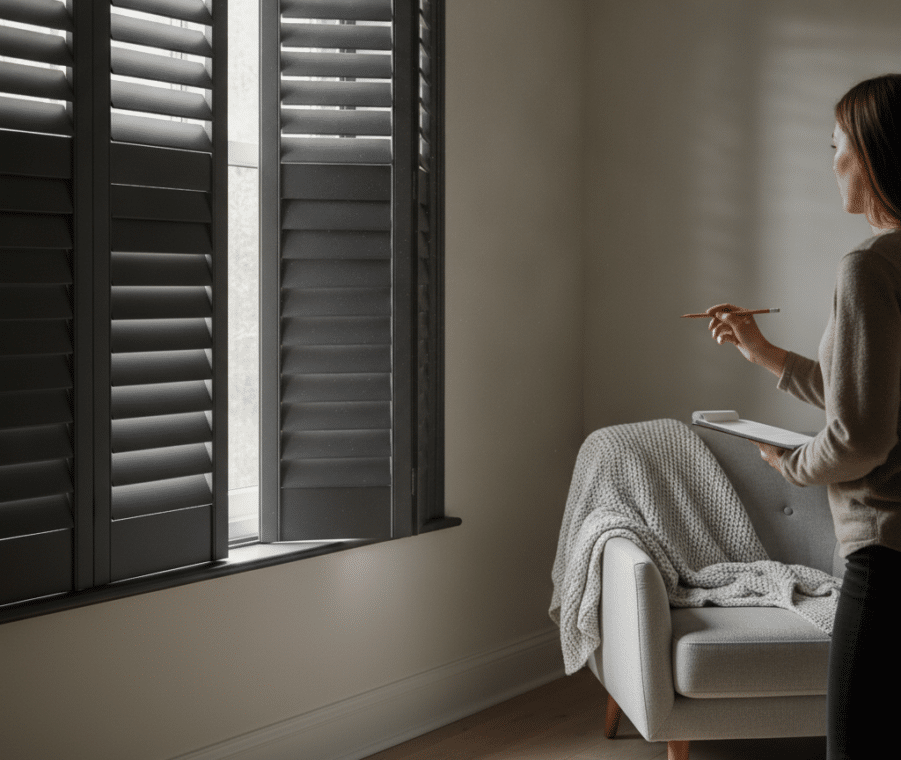
Will Dark or Charcoal Shutters Make My Room Look Too Dark?
For Sydney homeowners considering new window furnishings, the choice of colour for plantation shutters is a significant decision. While crisp white and light neutrals are popular for their ability to brighten a space, the allure of dark or charcoal shutters is undeniable. They offer a sophisticated, modern aesthetic that can add depth and character to a room. However, a common concern arises: will dark shutters make your room feel too dark or oppressive?
This comprehensive guide addresses that very question, offering practical, expert insights tailored for the Australian climate and lifestyle. We’ll explore how dark shutters interact with natural light, discuss their light absorption properties, and provide advice on achieving the perfect balance of style, light control, and privacy without sacrificing the brightness of your home.
Understanding Light Absorption vs. Light Blockage
It’s crucial to differentiate between light absorption and light blockage when discussing dark shutters. Dark colours, by their nature, absorb more light than lighter colours. This is why a black surface feels warmer in the sun than a white one. However, when it comes to shutters, their primary function is to block light from entering a room, regardless of their colour, when the louvres are closed.
When dark or charcoal shutters are fully closed and their louvres are angled for maximum privacy and light exclusion, they will block virtually the same amount of light as white shutters of the same material and construction. The perception of darkness in the room will largely depend on how effectively the shutters seal against the window frame and how much light is allowed to leak around the edges, rather than the colour of the louver blades themselves.
The real concern about a room looking “too dark” often stems from the visual impact of a large expanse of dark colour within the room when the shutters are either fully closed or even partially open. It’s about how the colour itself influences the overall mood and perceived brightness of the space.
Material Matters: PVC vs. Timber in Dark Hues
The material of your shutters plays a role in their appearance and performance, especially when choosing darker shades. In Australia, PVC and timber are the most common choices for plantation shutters, each offering distinct advantages.
PVC Plantation Shutters
PVC (Polyvinyl Chloride) shutters are highly durable, moisture-resistant, and an excellent choice for areas like bathrooms, laundries, or kitchens where humidity can be an issue. When finished in dark or charcoal colours, PVC shutters offer a sleek, consistent look. They are less prone to warping or fading in direct sunlight compared to some timber options, making them a robust choice for sunny Sydney homes. The finish on PVC shutters is often very smooth, which can give dark colours a more contemporary and uniform appearance. For those seeking a budget-conscious option without compromising on a dark aesthetic, PVC is often a fantastic choice.
Timber Plantation Shutters
Timber shutters, typically made from basswood or other hardwoods, offer a classic, natural aesthetic. When stained or painted in dark colours, timber shutters can showcase the natural grain, adding a layer of texture and warmth that PVC might not replicate. This subtle texture can soften the impact of a dark colour, preventing it from feeling too stark. Timber is also a natural insulator, contributing to temperature regulation within your home. While timber shutters can be a slightly higher investment, their timeless appeal and natural beauty in dark tones are often highly valued by homeowners. You can explore the differences further in our guide on PVC vs Timber Plantation Shutters.
Maximising Light Control with Dark Shutters
The key to enjoying dark or charcoal shutters without making your room feel too dark lies in intelligent design choices that maximise light control. Plantation shutters offer exceptional versatility in this regard.
Louvre Size and Light Influx
The size of your shutter louvres (blades) significantly impacts the amount of light and view you can achieve when the shutters are open. Larger louvres, such as 89mm or 114mm, allow more light to flood into the room when tilted open, and offer a clearer view to the outside. This is particularly beneficial for dark shutters, as the larger gaps between the blades can visually counteract the dark colour when they are open. Smaller louvres (e.g., 63mm) offer more privacy but restrict the light and view more significantly. Consider reading our guide on Choosing Shutter Louvre Sizes for more detail.
Tilt Rod Options: Clearview vs. Traditional
The mechanism used to tilt your shutter blades also affects light entry and aesthetics. Traditional tilt rods run vertically down the front of the shutters, connecting all the louvres. While functional, they can slightly obstruct the view and the path of light. Clearview (or hidden) tilt rods, on the other hand, are discreetly integrated into the side of the shutter panel, offering an unobstructed view and allowing maximum light to enter when the louvres are open. For dark shutters, a Clearview system can help maintain an open, airy feel when you want it. Learn more about this in our article on Clearview vs Hidden Tilt Rods.
Shutter Styles for Flexible Light Management
- Full Height Shutters: These cover the entire window and offer comprehensive light control. When fully open, they can be folded back to allow maximum light. When closed, they provide excellent light blockage and privacy.
- Cafe Style Shutters: Covering only the bottom half or two-thirds of the window, cafe style shutters offer privacy while allowing ample natural light to stream in from the top. This is an excellent option for rooms where you want the sophisticated look of dark shutters without compromising on overhead light. Discover the benefits of Cafe Style Shutters.
- Tier-on-Tier Shutters: These shutters feature separate top and bottom panels that operate independently. This allows for incredible flexibility, enabling you to open the top panels for light while keeping the bottom closed for privacy, or vice-versa. This style is particularly effective for managing light with dark shutters, as you can easily adjust the amount of natural light entering the room throughout the day. Explore Tier-on-Tier Shutters for more on flexible light control.
The Role of Dark Shutters in Insulation and Energy Efficiency
Beyond aesthetics, shutters provide a practical benefit in terms of insulation, and dark colours can play a subtle role. In the Australian climate, managing indoor temperature is crucial for comfort and energy bills.
Shutters create an insulating layer of air between the window pane and the shutter itself. This air pocket helps to reduce heat transfer, keeping your home cooler in summer and warmer in winter. While the primary insulation benefit comes from this air barrier, the colour of the shutters can have a secondary effect.
Darker colours absorb more solar radiation. In winter, if your dark shutters are closed on a sunny day, they can absorb heat and radiate some of it inwards, contributing to a slight warming effect. Conversely, in summer, if the shutters are exposed to direct sunlight for extended periods, the absorbed heat could potentially radiate inwards if not managed correctly. However, the ability of shutters to block direct sunlight and create an insulating barrier generally outweighs the colour’s direct absorption effect. By keeping dark shutters closed during the hottest parts of the day in summer, you can effectively block solar gain and keep your rooms cooler. In winter, adjusting the blades to capture low-angle sun can enhance warmth.
Designing with Dark Shutters: Beyond Light
When incorporating dark or charcoal shutters into your Sydney home, consider the broader design implications to ensure they enhance, rather than detract from, your interior.
Room Size and Aspect
In smaller rooms, a full expanse of dark shutters can sometimes make the space feel more enclosed. However, this can also create a cosy, intimate atmosphere. In larger rooms, dark shutters can anchor the space and add a dramatic focal point. Consider the room’s aspect: north-facing rooms (in the Southern Hemisphere) receive the most direct sunlight, making dark shutters an excellent choice for controlling glare and heat. South-facing rooms, which tend to be cooler and receive less direct light, might benefit from lighter shutters to maximise what little natural light they get, or dark shutters can be used to create a deliberate mood.
Pairing with Interior Decor
Dark shutters pair beautifully with a variety of interior styles. For a sophisticated, monochromatic look, combine them with lighter grey or white walls and furniture, allowing the shutters to provide a strong contrast. In industrial or minimalist settings, dark shutters complement raw materials and clean lines. For a warmer feel, pair them with timber furniture, natural textures, and a pop of colour in accessories. Don’t forget the impact of artificial lighting; strategically placed lamps can brighten areas and highlight features, preventing any sense of gloominess.
Achieving Total Darkness
If your primary goal is to achieve near-total darkness, such as in a bedroom, dark shutters are inherently effective. When combined with light-blocking frames (like a Z-frame or L-frame with a sub-frame) and precise installation, they can significantly reduce light leakage. While the colour itself doesn’t block *more* light than a white shutter when closed, the visual perception of darkness will be enhanced. For more on this, see our article on How to Achieve Total Darkness with Bedroom Plantation Shutters.
Practical Advice for Sydney Homeowners
For budget-conscious Sydney homeowners, investing in quality shutters is a smart move. Dark or charcoal shutters offer a contemporary edge that can elevate your home’s aesthetic and value. Here are some final tips:
- Get Samples: Always view physical samples of dark and charcoal colours in your home, at different times of day, to see how they interact with your specific lighting and wall colours.
- Consider Your Lifestyle: If you love bright