
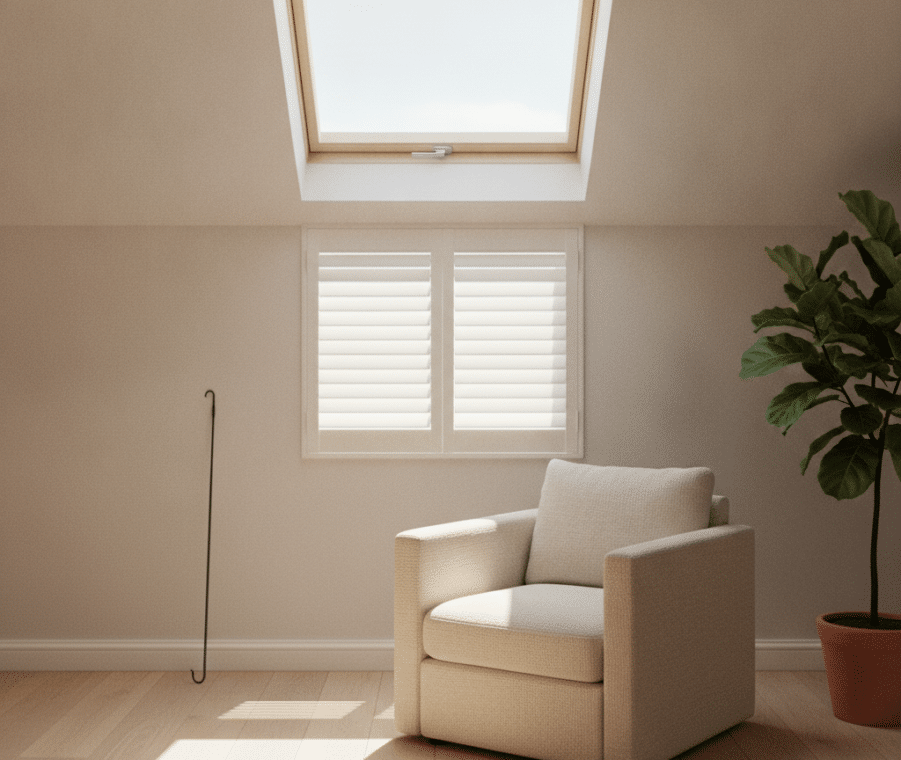
Taming the Midday Sun: The Power of Skylight Plantation Shutters
Skylights are a fantastic architectural feature, bringing natural light deep into your Sydney home, brightening otherwise dim spaces, and creating an airy, open feel. However, as many homeowners discover, this blessing can quickly turn into a challenge, especially during the harsh Australian midday. Unfiltered overhead sunlight can lead to intense glare, uncomfortable heat build-up, and fading of furniture and flooring. This is where skylight plantation shutters emerge as an elegant and highly effective solution.
Unlike standard blinds or curtains, plantation shutters for skylights are specifically designed to manage light and temperature from above with precision and style. They offer a robust, long-term answer to the common issues associated with overhead glazing, transforming an area of discomfort into a perfectly controlled, inviting space. For budget-conscious Sydney homeowners seeking practical insights into window furnishings, understanding the mechanism and benefits of these shutters is key to making an informed decision.
The Unique Challenge of Overhead Light in Sydney Homes
Why Skylights are a Double-Edged Sword
Skylights are celebrated for their ability to flood interiors with natural illumination, reducing the need for artificial lighting during the day. They can make rooms feel larger, more vibrant, and connect occupants with the sky above. However, their direct exposure to the sun, particularly during the middle of the day, presents unique problems that traditional window coverings are ill-equipped to handle.
The angle of the sun at midday in Sydney means that light streams directly downwards, often with an intensity that can be overwhelming. This isn’t just about brightness; it’s about the quality and impact of that light. Without proper control, what starts as a beautiful natural glow can quickly become a harsh, intrusive beam.
The Impact of Uncontrolled Overhead Glare and Heat
The consequences of uncontrolled skylight exposure are numerous and can significantly diminish your home comfort. Intense glare can make it difficult to read, watch television, or work on a computer, forcing you to draw curtains or blinds on other windows, even if they aren’t facing the sun directly. This defeats the purpose of having a skylight in the first place.
Beyond glare, the most significant issue for many Sydney residents is heat gain. Skylights act like a magnifying glass, allowing a substantial amount of solar radiation to penetrate your home. This can lead to a noticeable increase in indoor temperatures, placing extra strain on air conditioning systems and driving up energy bills. Over time, constant exposure to direct UV rays can also cause irreversible damage, fading carpets, upholstery, artwork, and timber floors.
How Skylight Plantation Shutters Work: A Closer Look at the Mechanism
Skylight plantation shutters are engineered to address the specific challenges of overhead window coverings. Their design incorporates robust construction and clever operational mechanisms to ensure effective light control, insulation, and durability, even in hard-to-reach positions.
Designed for Overhead Application
The fundamental difference between skylight shutters and standard window shutters lies in their frame and mounting system. Skylight shutters are typically installed within a custom-built frame that is securely fastened around the skylight opening. This frame is crucial as it provides the structural integrity needed to hold the shutter panels horizontally or at an angle, preventing sagging or warping over time. The panels themselves are often hinged or designed to slide within tracks, allowing for full access to the skylight glass for cleaning or maintenance when needed.
The custom fit is paramount. Given the varying sizes and shapes of skylights, each shutter system is tailor-made to ensure a perfect seal and seamless integration with your ceiling. This precision engineering is what guarantees optimal performance and a polished aesthetic.
Components and Operation: Louvres, Frames, and Tilt Systems
At the heart of the skylight plantation shutter’s effectiveness are its adjustable louvres (slats). These louvres are typically wider than those found in standard blinds, ranging from 63mm to 114mm, which allows for greater light control and a clearer view when open. They are connected via a tilt rod or a hidden tilt mechanism, allowing them to be rotated in unison.
- Louvres: The individual slats that can be angled to control light and privacy. Their rotation is the primary mechanism for light management.
- Frames: The sturdy structure that houses the shutter panels and is securely mounted around the skylight opening. These frames are designed to withstand gravity and maintain the shutter’s integrity.
- Tilt System: This can be a visible tilt rod running down the centre of the louvres, or a hidden mechanism integrated into the side stile of the panel. Both allow for smooth, simultaneous adjustment of all louvres. The hidden tilt system offers a cleaner, more contemporary look.
- Panel Configuration: Skylight shutters can come as single panels, bi-fold panels, or even sliding panels, depending on the size and design of the skylight. This flexibility ensures that even very large skylights can be effectively covered.
By adjusting the angle of the louvres, you can precisely manage the amount of sunlight entering the room. You can direct light upwards, diffuse it across the ceiling, or block it almost entirely, offering a level of control that fixed skylight shades simply cannot match.
Manual vs. Motorised Control for Hard-to-Reach Skylights
Given that skylights are often installed in high ceilings, accessibility is a key consideration. Skylight plantation shutters offer various operation methods:
- Manual Operation: For skylights within reach, a simple hand-operated tilt rod or direct manipulation of the louvres (with a hidden tilt) is sufficient.
- Extension Pole: For slightly higher skylights, a long extension pole with a hook or adapter can be used to reach and adjust the tilt rod or a specific louvre.
- Motorised Control: For truly inaccessible skylights, motorised shutters are the ultimate convenience. These systems integrate small, quiet motors that can be controlled via a remote, wall switch, or even a smart home system. This allows for effortless adjustment of the louvres at any time, providing maximum flexibility and convenience without the need for ladders or poles. This option, while a higher upfront investment, offers unparalleled ease of use for overhead applications.
Unrivalled Light Control and Enhanced Privacy
Precision Light Management
The most compelling benefit of skylight plantation shutters is their superior light control. Unlike roller blinds or fixed shades that offer an all-or-nothing approach, shutters allow for nuanced adjustments. With a simple tilt of the louvres, you can:
- Diffuse Harsh Glare: Angle the louvres to bounce direct sunlight off the ceiling, softening the light and spreading it evenly throughout the room without sacrificing brightness.
- Direct Light: Point the louvres to direct light towards specific areas, such as a wall or a plant, creating architectural interest.
- Block Direct Sun: Close the louvres completely to achieve near-blackout conditions, perfect for media rooms, bedrooms, or simply to cool down a room on an exceptionally hot day.
- Maintain Views: When fully open, the wide louvres offer an unobstructed view of the sky, allowing you to enjoy the natural light without impediment.
This level of precision means you can adapt your indoor environment to suit the time of day, the weather, or your current activity, all while maintaining a consistent aesthetic.
Protecting Your Privacy from Above
While often overlooked, privacy can be a concern with skylights, particularly in densely populated areas of Sydney or with multi-storey homes where neighbours might have a vantage point. Skylight plantation shutters offer an effective solution, allowing you to close the louvres to block downward views into your home, ensuring your personal space remains private. This is especially valuable for skylights in bathrooms, bedrooms, or any area where discretion is desired.
Choosing the Right Material for Your Skylight Shutters
The choice of material is crucial for skylight plantation shutters, as they are exposed to significant heat and UV radiation. Durability, stability, and heat resistance are paramount for longevity and performance in the Australian climate.
PVC/Polyvinyl: Durability and Heat Resistance
For skylight applications, PVC (polyvinyl) plantation shutters are often an excellent choice. They are highly durable, resistant to moisture, and, crucially for skylights, excellent at handling high temperatures and direct UV exposure without warping, cracking, or fading. This makes them ideal for areas that experience intense sunlight and heat, such as overhead installations. PVC shutters are also easy to clean and maintain, providing a practical and long-lasting solution for your skylights. You can explore more about different shutter types on our Products page.
Timber (Basswood): Classic Aesthetics and Natural Insulation
Timber plantation shutters, particularly those made from high-quality Basswood, offer a classic, warm aesthetic that many Sydney homeowners adore. Basswood is lightweight yet strong, and when properly treated and finished, it can offer good stability. Timber is also a natural insulator, which can contribute to thermal regulation. However, for skylights, it’s essential to consider the extreme conditions. While Basswood is a premium choice for interior shutters, continuous direct exposure to intense overhead UV and heat might require more rigorous maintenance or consideration of a more robust material like PVC for ultimate longevity in this specific application. For more insights into timber options, see our guide on Why Basswood is the Premium Choice for Sydney Plantation Shutters.
Factors to Consider for Overhead Exposure
When selecting a material for skylight shutters, always consider:
- UV Stability: Will the material resist fading and degradation from constant direct sunlight?
- Heat Resistance: Can it withstand the high temperatures that can build up around a skylight without warping or discolouring?
- Weight: Lighter materials are generally easier to operate and place less strain on the mounting hardware, which is important for overhead installations.
- Maintenance: